Introduction
PCB terminal blocks are small components, but they play an important role in connecting external wires to a printed circuit board. They are widely used for power input, signal transmission, control wiring, and internal electrical connections in industrial and electronic equipment.
Choosing the wrong PCB terminal blocks can lead to loose wiring, poor contact, excessive temperature rise, difficult assembly, maintenance inconvenience, or reduced long-term reliability. For industrial control systems, power modules, LED equipment, home appliances, inverters, and automation devices, selecting the right terminal block early in the design stage can help reduce redesign, production delays, and field service issues.
What Are PCB Terminal Blocks?
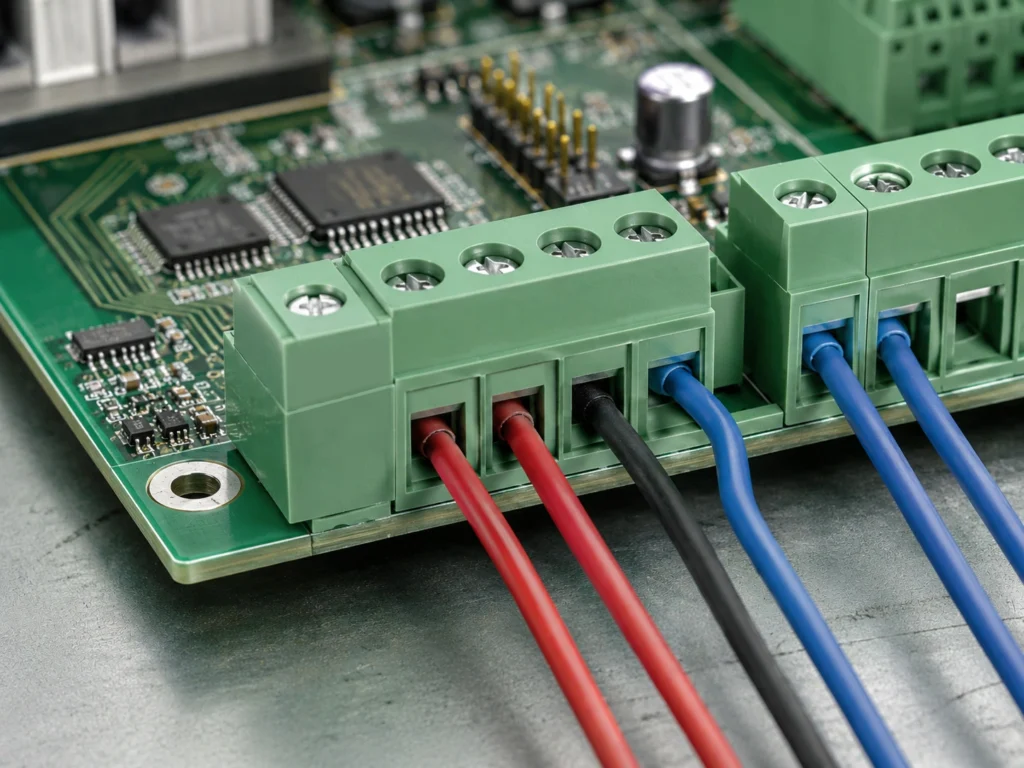
PCB terminal blocks are wire-to-board connection components used to connect external conductors to a printed circuit board. They allow wires to be secured to the PCB through screws, springs, plugs, or other clamping structures.
Compared with direct soldering wires to a board, PCB terminal blocks make wiring cleaner, easier to assemble, and more convenient to maintain. They are especially useful when a product needs field wiring, modular replacement, or repeated installation during testing and production.
Why Choosing the Right PCB Terminal Blocks Matters?
A terminal block must match both the electrical requirements and the mechanical design of the equipment. If the current rating is too low, the connection may overheat. If the pitch is too small for the voltage level, electrical clearance may be insufficient. If the wire range does not match the actual cable, the connection may become unstable.
Selection also affects production efficiency. A terminal block that looks suitable in a catalog may still cause problems if there is not enough space for a screwdriver, if the wire entry direction conflicts with the enclosure, or if the component cannot handle vibration in the final application.
Understand Your Project Requirements
Before choosing PCB terminal blocks, start with the basic project conditions. Confirm the working current, working voltage, wire size, PCB space, expected connection frequency, and operating environment. These factors will quickly narrow down suitable product types.
You should also consider how the end user will install or maintain the equipment. A factory-assembled product may use a fixed terminal block, while a field-serviceable control module may benefit from pluggable PCB terminal blocks. For compact devices, mounting direction and component height can be just as important as electrical ratings.
Choose the Right Connection Method
Different PCB terminal blocks use different connection methods. The best option depends on wiring efficiency, maintenance needs, mechanical strength, and the environment where the product will operate.
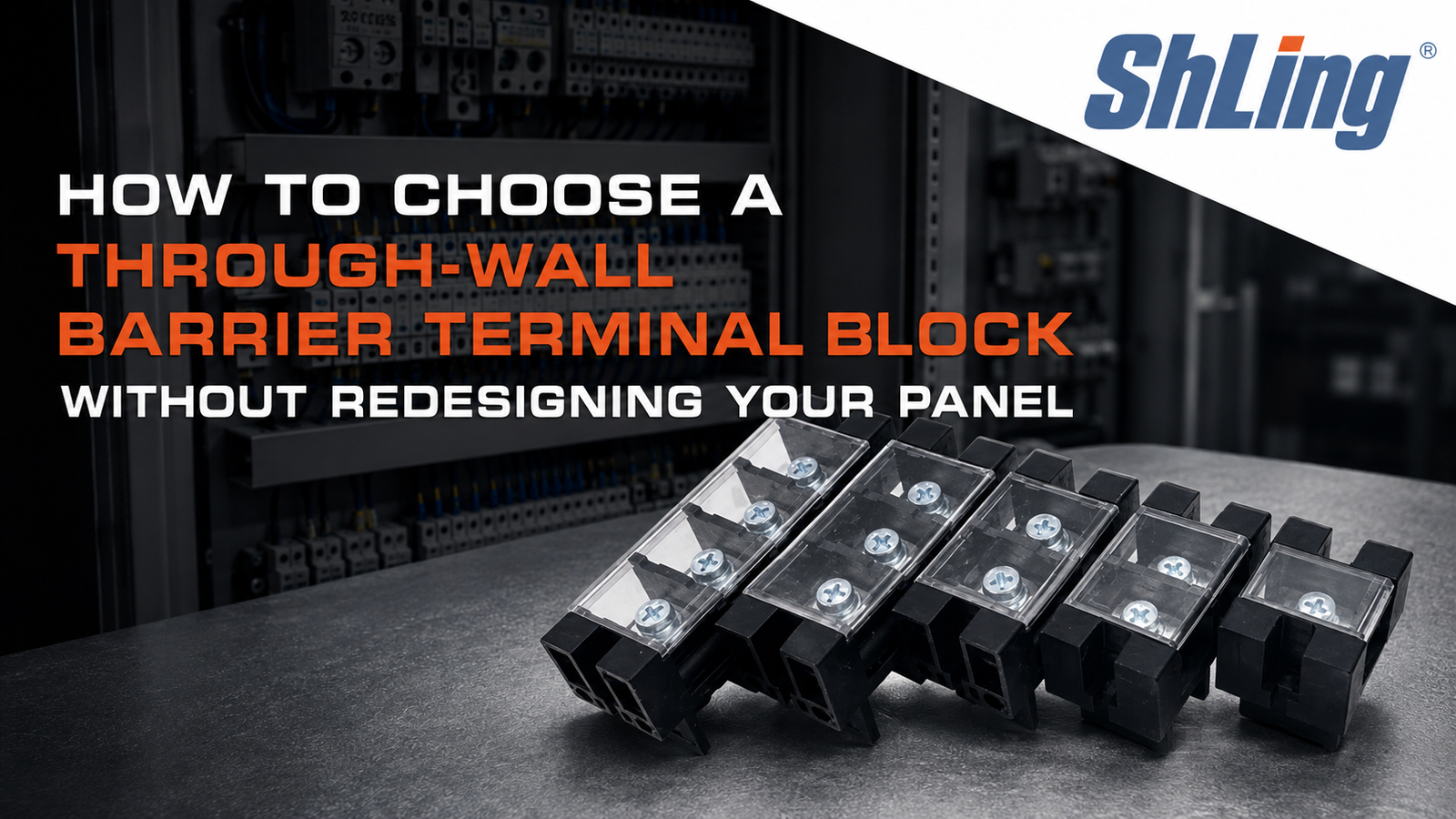
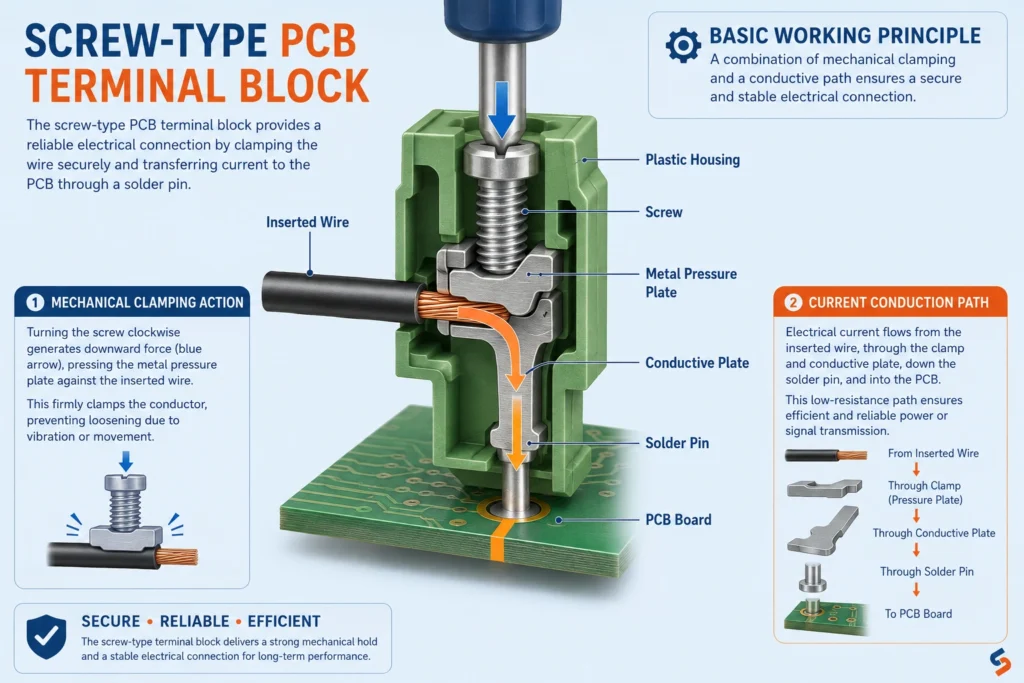
Screw PCB terminal blocks are common in industrial and power applications because they provide a strong and familiar connection. Spring PCB terminal blocks are useful when faster wiring and vibration resistance are important. Pluggable PCB terminal blocks are suitable for modular products that require easy replacement. Barrier PCB terminal blocks provide clear separation between wiring points and are often used in power and control applications.
| Type | Connection Method | Main Advantages | Suitable Applications |
|---|---|---|---|
| Screw PCB terminal blocks | Wires are secured by tightening screws | Strong connection, familiar operation, suitable for many wire sizes | Industrial control, power modules, home appliances, control boards |
| Spring PCB terminal blocks | Wires are clamped by spring force or push-in structure | Fast wiring, reduced maintenance time, good for repeated assembly | Automation equipment, LED devices, control systems |
| Pluggable PCB terminal blocks | A plug connects with a PCB-mounted header | Easy module replacement, convenient testing and field maintenance | Control modules, instruments, communication equipment, power systems |
| Barrier PCB terminal blocks | Screw connection with physical barrier separation | Clear wiring positions and good mechanical stability | Power equipment, inverters, industrial control boards |
Focus on Key Electrical Parameters
Rated current and rated voltage are two of the most important parameters when selecting PCB terminal blocks. The rated current should be higher than the actual operating current, with enough margin for continuous use and temperature rise. The rated voltage should match the system voltage and the required safety distance on the PCB.
Temperature rise is also important, especially in power modules, inverters, and other high-load applications. Even if a terminal block meets the current rating on paper, the actual performance can be affected by wire size, PCB copper thickness, ambient temperature, and enclosure ventilation.
Creepage distance and clearance should not be ignored. Creepage distance refers to the shortest path along the insulating surface between conductive parts, while clearance refers to the shortest distance through air. These factors become more important in higher voltage applications or harsh environments.
| Parameter | Meaning | Selection Advice |
|---|---|---|
| Rated Current | The current the terminal block is designed to carry | Choose a rating above the actual operating current and consider temperature rise during continuous operation |
| Rated Voltage | The voltage the terminal block can safely withstand | Match the circuit voltage and check clearance and creepage requirements |
| Pitch | Center-to-center distance between adjacent terminal positions | Select based on PCB space, voltage level, and wiring convenience |
| Poles | Number of connection positions | Choose according to the number of power, signal, or control lines |
| Wire Range | Supported wire size range | Confirm that the terminal block accepts the actual wire cross-section or AWG size |
| Mounting Type | How the terminal block is mounted to the PCB | Use through-hole for stronger mechanical support or SMT for automated assembly |
| Material | Housing and conductive metal materials | Check flame resistance, temperature resistance, conductivity, and corrosion protection |
| Certification | Compliance documents or approvals | For export projects, confirm UL, CE, RoHS, or other required documents |
Consider Pitch, Poles, and Wire Size
Pitch affects both electrical safety and board layout. A smaller pitch saves PCB space, but it may not be suitable for higher current or higher voltage applications. A larger pitch provides more wiring space and can help improve separation between connection points.
Poles should match the number of required connections. For example, a power input may need two or three poles, while a control interface may require more signal positions. Wire range is equally important. If the wire is too small, it may not be clamped securely. If it is too large, it may not fit into the terminal opening or may be difficult to install.
Compare Through-Hole and SMT Mounting
PCB terminal blocks are commonly available in through-hole and SMT versions. Through-hole PCB terminal blocks use pins inserted into plated holes and soldered to the board. They generally provide stronger mechanical support and are often preferred for higher force, larger wire sizes, or field wiring.
SMT PCB terminal blocks are mounted on the surface of the PCB and are suitable for automated assembly. They can help improve production efficiency in compact electronic products, but the mechanical strength and current capability should be checked carefully for each design.
| Mounting Type | Main Advantage | Best For | Limitation |
|---|---|---|---|
| Through-hole PCB terminal blocks | Strong solder joint and better mechanical support | Industrial equipment, power boards, products with field wiring or higher pulling force | Requires PCB holes and may add process steps |
| SMT PCB terminal blocks | Suitable for automated surface-mount production | Compact electronics, high-volume assembly, space-sensitive designs | Mechanical strength and current capability must be carefully verified |
Consider PCB Layout and Wiring Space
Good PCB layout can prevent many assembly problems. The terminal block should be positioned so that wires can enter smoothly, tools can access the connection point, and technicians can inspect or replace wiring when needed.
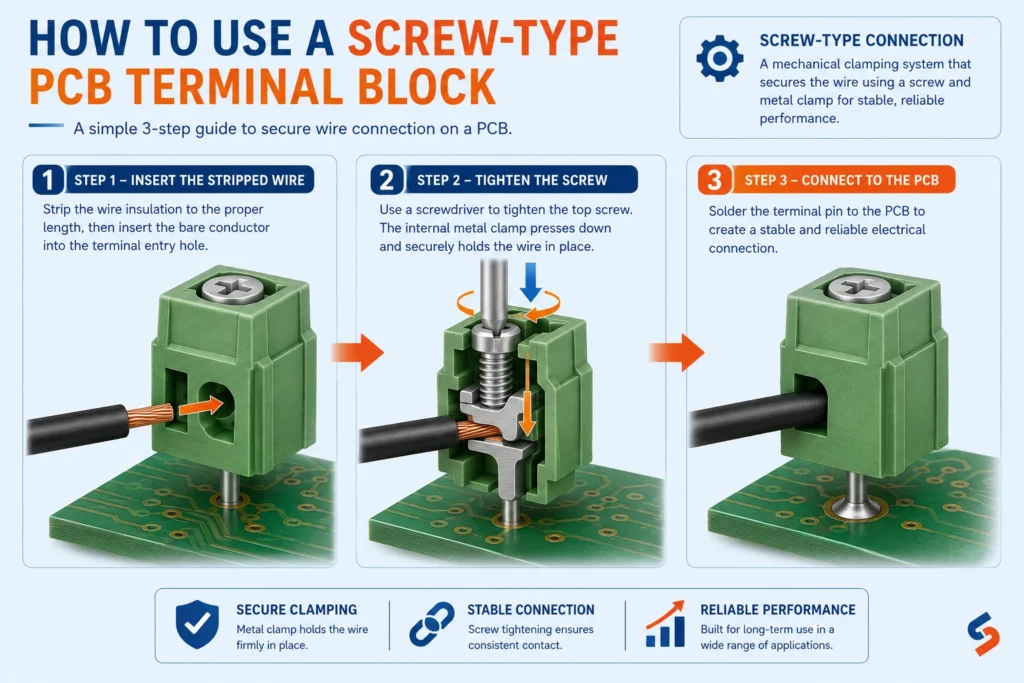
For screw terminal blocks, leave enough space for a screwdriver. For pluggable terminal blocks, provide clearance in the plug-in and pull-out direction. Also consider nearby tall components, enclosure walls, heat sources, and cable bending space. A terminal block may meet the electrical requirements but still be unsuitable if it creates wiring or maintenance difficulty.
Materials and Operating Environment
The housing material should provide proper insulation, flame resistance, and temperature resistance. The conductive metal parts should offer stable conductivity, secure clamping force, and suitable surface treatment to reduce corrosion risk.
For applications exposed to high temperature, humidity, vibration, or dust, material selection becomes more important. Industrial control equipment, power supplies, inverters, and outdoor-related systems may require stronger mechanical structures, better insulation performance, and more careful review of creepage and clearance.
Choose a Reliable Supplier
A reliable supplier should provide more than a basic product list. For B2B projects, datasheets, dimensional drawings, PCB layout recommendations, samples, certification documents, and technical support are all useful during design and purchasing.
Stable supply is also important. If a terminal block is selected into a PCB design, replacing it later may require layout changes or new testing. Before mass production, it is practical to test samples for wiring feel, soldering quality, fit with the enclosure, terminal orientation, and actual assembly efficiency.
Common Mistakes to Avoid
One common mistake is selecting PCB terminal blocks only by appearance or price. Two terminal blocks may look similar but have different current ratings, materials, wire ranges, or certification status.
Another mistake is ignoring the real operating environment. A terminal block used in a low-power indoor device may not be suitable for a high-current power module or equipment exposed to vibration. Designers should also avoid choosing the wrong pitch, forgetting tool access space, or using a terminal block without checking the datasheet and drawings.
It is also risky to skip sample testing before mass production. A short sample review can reveal issues with wire insertion, screw operation, soldering, plug-in force, or interference with nearby components.
Quick Selection Checklist for PCB Terminal Blocks
Before finalizing PCB terminal blocks for your project, check the following points:
- Do the rated current and rated voltage match the application?
- Is the wire size within the supported wire range?
- Is the pitch suitable for the PCB layout and voltage level?
- Are the number of poles and wiring direction correct?
- Do you need screw, spring, pluggable, or barrier type?
- Should the product use through-hole or SMT mounting?
- Is there enough space for tools, wiring, and maintenance?
- Will the product face high temperature, humidity, vibration, or dust?
- Are UL, CE, RoHS, or other documents required?
- Can the supplier provide samples, datasheets, and drawings?
Frequently Asked Questions
What are PCB terminal blocks used for?
PCB terminal blocks are used to connect external wires to printed circuit boards. They are commonly used for power input, signal wiring, control circuits, and equipment connections.
How do I choose the right PCB terminal blocks?
Start with current rating, voltage rating, wire size, pitch, poles, mounting type, and operating environment. Then confirm the datasheet, drawing, certification documents, and sample performance.
What does pitch mean in PCB terminal blocks?
Pitch is the center-to-center distance between adjacent terminal positions. It affects PCB layout, wiring space, and electrical separation between connection points.
What is the difference between screw and spring PCB terminal blocks?
Screw terminal blocks secure the wire by tightening a screw, while spring terminal blocks use spring force or push-in structures. Screw types are familiar and strong, while spring types are faster to wire and useful for efficient assembly.
Are pluggable PCB terminal blocks better than fixed types?
Not always. Pluggable PCB terminal blocks are better for modular products, testing, and field replacement. Fixed types may be better for simple, stable, long-term installations.
What current rating should I choose?
Choose a current rating higher than the actual operating current. Also consider temperature rise, ambient temperature, wire size, PCB copper design, and whether the equipment runs continuously.
What wire size can PCB terminal blocks accept?
It depends on the terminal block model. Always check the wire range in the datasheet and confirm whether it supports the required solid or stranded wire size.
What is the difference between through-hole and SMT PCB terminal blocks?
Through-hole terminal blocks are inserted into PCB holes and usually provide stronger mechanical support. SMT terminal blocks are mounted on the PCB surface and are better suited for automated assembly and compact designs.
Conclusion
Choosing the right PCB terminal blocks requires more than matching a simple part number. You need to consider electrical ratings, pitch, wire size, connection method, mounting type, PCB layout, materials, operating environment, and supplier support.
For industrial control, power modules, LED equipment, home appliances, inverters, and automation equipment, the best approach is to confirm the technical requirements early, compare suitable models, and test samples before mass production. This helps ensure reliable wiring, smoother assembly, and better long-term product performance.