If your usual terminal block is unavailable, has a long lead time or no longer fits your purchasing plan, an alternative supplier may look like a simple solution.
However, two feed-through terminal blocks can perform the same basic function without being interchangeable.
A small difference in terminal width can change the complete DIN rail layout. A different conductor range can prevent reliable termination, while an incompatible bridge system may force you to replace accessories across the terminal strip.
For OEMs, panel builders and industrial equipment manufacturers, the question is therefore not:
“Does this terminal block look similar?”
The better question is:
“Can I change to this terminal block without creating new electrical, mechanical or assembly problems?”
Quick Answer
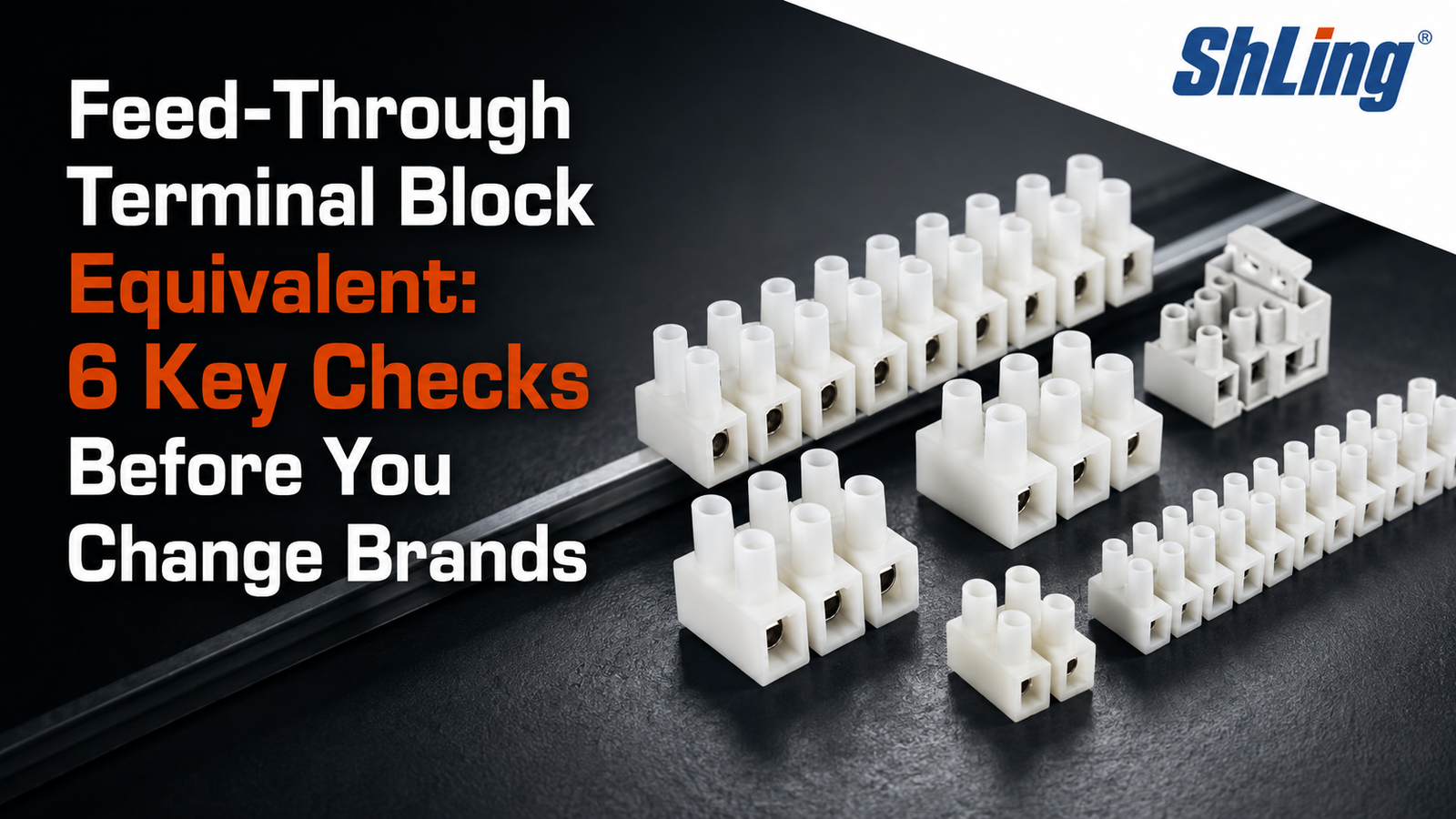
Before approving a feed-through terminal block equivalent, compare these six items:
- Rated current and voltage
- Wire size and conductor type
- DIN rail mounting and terminal dimensions
- Connection technology
- Bridges, markers and accessories
- Certification and project-specific requirements
If these six interfaces match the application, a feed-through terminal block replacement may be possible without redesigning the terminal strip or changing the established wiring process.
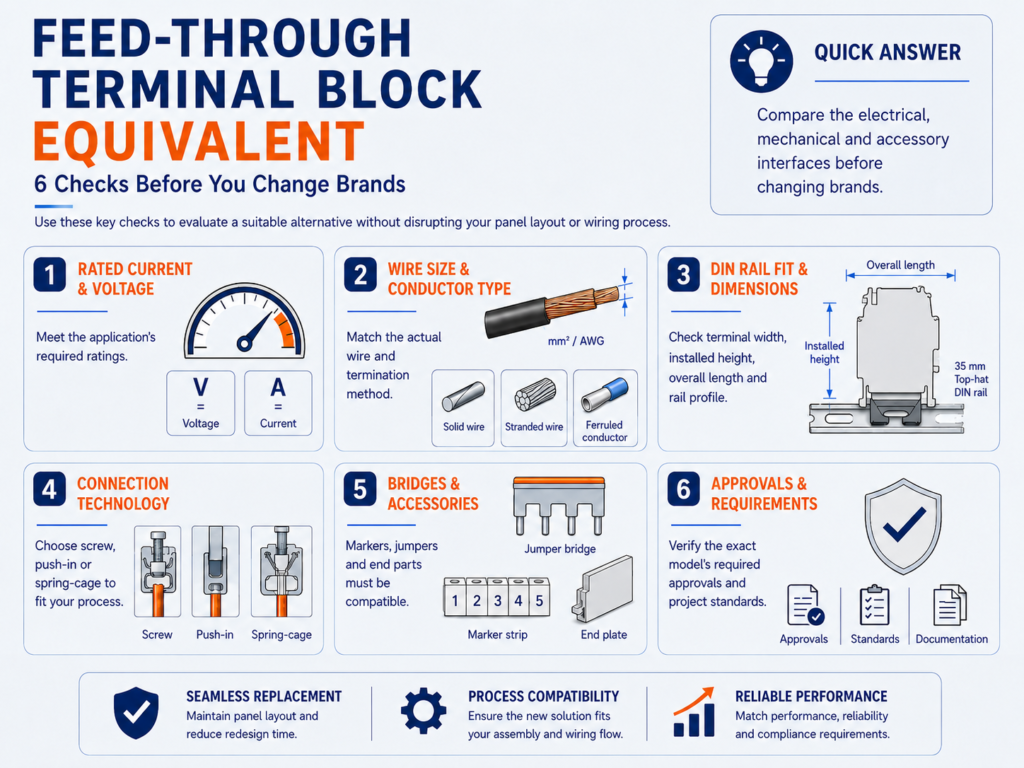
Figure 1. Six compatibility checks to complete before approving a feed-through terminal block equivalent.
Start With Electrical Requirements — Not the Brand Name
A feed-through terminal block provides a conductive path between connection points while keeping wiring organized, identifiable and serviceable inside electrical equipment.
But the fact that two terminal blocks perform the same function does not mean that they have the same electrical capability.
When evaluating an alternative, first compare:
- Rated current
- Rated voltage
- Nominal cross-section
- Actual conductor range
- Required insulation performance
- Application-specific electrical requirements
For example, if your existing application requires 24 A and 800 V, a candidate terminal rated below either requirement should not be selected simply because its housing has a similar size.
The electrical requirements of the application should always define the minimum acceptable specification.
Do Not Compare Current Rating Alone
This is one of the easiest sourcing mistakes to make.
Two products may both be rated at 24 A yet differ in conductor range, voltage, connection technology, installation dimensions and compatible accessories.
Electrical compatibility is the first filter in a terminal block cross-reference—not the final approval.
Check the Actual Wire — Not Just the Nominal Cross-Section
A specification such as “2.5 mm² terminal block” is useful, but it does not tell the whole story.
Before changing brands, confirm the conductor that will actually be installed:
- Solid or stranded conductor?
- Flexible conductor?
- Ferrule-terminated wire?
- Wire size in mm² or AWG?
- Required stripping length?
- One conductor or multiple conductors per connection point?
A terminal block must accept the conductor correctly and provide the required connection method for the application.
If your production line uses pre-crimped ferrules, changing to a terminal that requires different wire preparation can add labor and process changes even when the electrical rating is acceptable.
What to Send the Supplier
Instead of saying:
Too general
“I need a 2.5 mm² terminal block.”
It is more useful to send:
Better request
“We use 2.5 mm² stranded wire with ferrules. Please confirm whether this model is suitable.”
That small difference gives the supplier much more information for a compatibility check.
Measure the DIN Rail Layout Before You Approve the Alternative
This is where many apparently suitable alternatives become inconvenient.
Feed-through terminal blocks are installed side by side in long terminal strips. Even a small width difference becomes significant across 20, 30 or 50 terminals.
Compare:
- DIN rail type
- Terminal width
- Overall height
- Overall length
- End-stop arrangement
- Clearance to cable ducts
- Clearance to neighboring components
- Marker position
- Jumper or bridge position
If an existing terminal is 5.2 mm wide and the alternative is 1 mm wider, a 30-position strip becomes 30 mm wider. The product may fit the DIN rail while the complete assembly no longer fits the cabinet.
That is why “DIN rail compatible” does not automatically mean “drop-in replacement.”
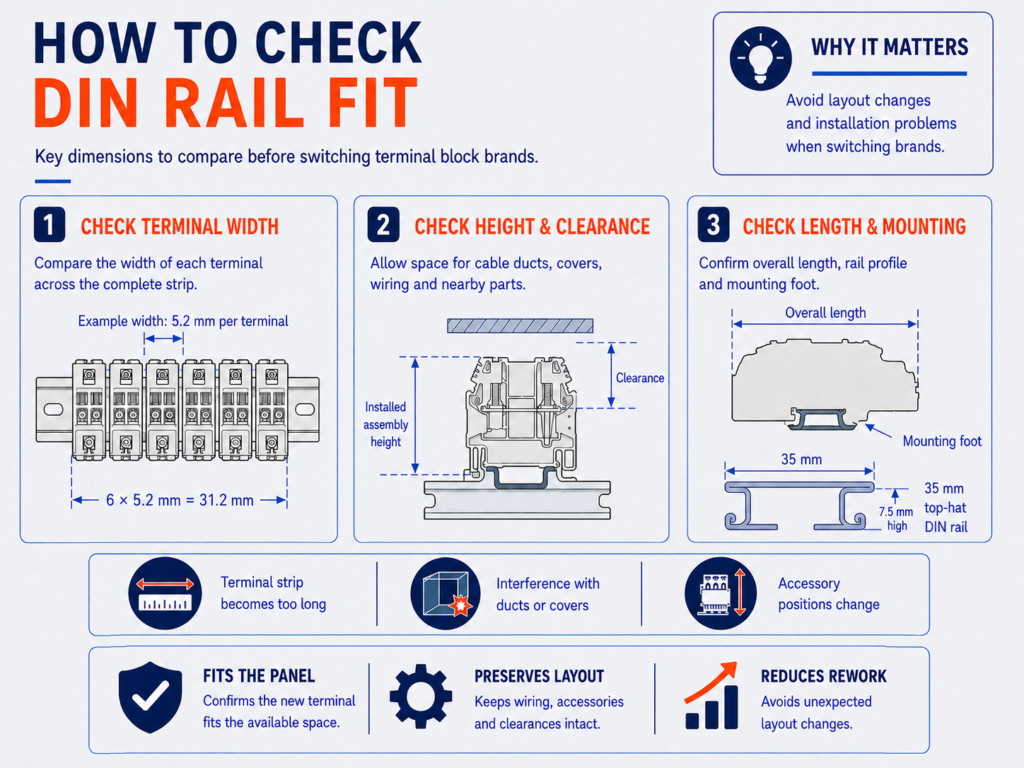
Figure 2. Example showing how a 1 mm difference per terminal can change the overall terminal-strip width.
For Existing Panels, Ask for Dimensions First
If the control cabinet or machine is already designed, send the existing product drawing or terminal-strip dimensions before placing a large order.
At SHLING, a replacement evaluation can begin with the old model number, datasheet, drawing or clear product photos. The goal is to compare the critical interfaces before moving to sample verification.
Decide Whether You Can Change the Connection Technology
The original terminal may use:
- Screw connection
- Push-in connection
- Spring-cage connection
- Another project-specific connection method
Changing connection technology can be valid, but it should be an engineering decision—not an accidental purchasing change.
Moving from screw connection to push-in connection may affect wiring speed, conductor preparation, tools, access direction, operating instructions and maintenance.
Push-in terminals can support faster front-entry wiring, while screw terminals may better match an established assembly and maintenance process.
Neither technology is automatically better for every project.
The deciding question is whether the change affects your existing production or maintenance process.If the answer is yes, include that change in the replacement evaluation.
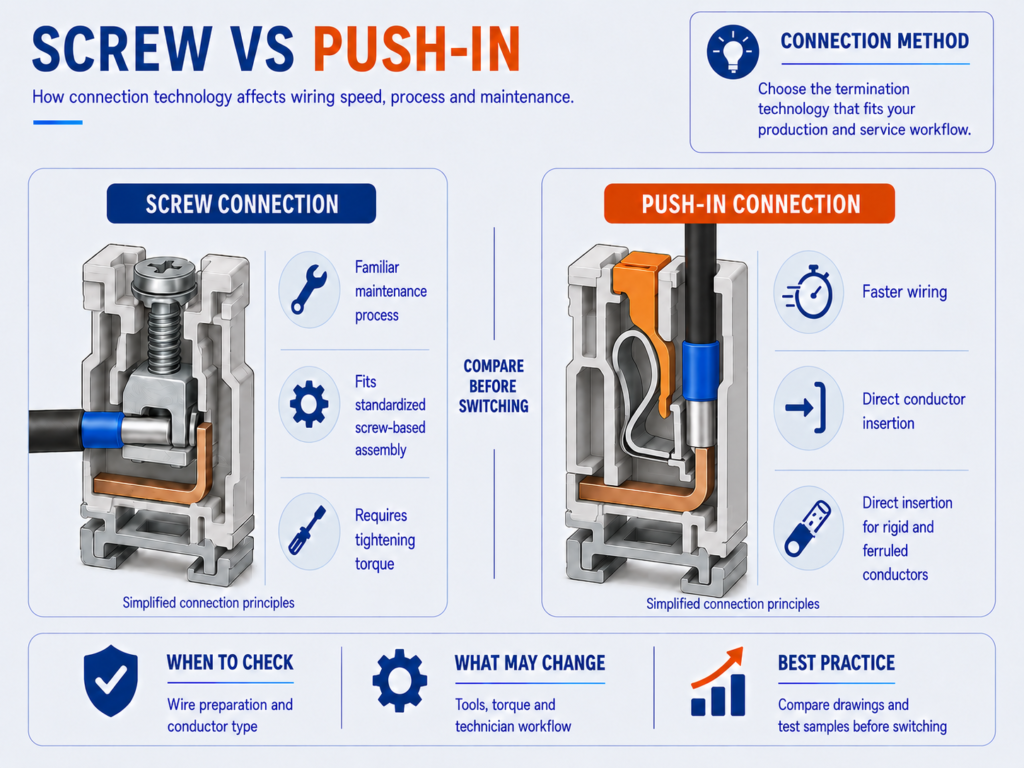
Figure 3. Screw and push-in connections can serve similar functions but require different wiring processes
Do Not Forget Bridges, Markers and End Accessories
Accessory compatibility is often overlooked during an equivalent-terminal comparison.
The terminal itself may fit perfectly while the existing accessories do not.
Before changing brands, check whether your terminal strip uses:
- Fixed bridges
- Insertion bridges
- Jumper bars
- End covers
- End stops
- Marker strips
- Partition plates
- Test accessories
Where a panel uses extensive cross-connections, bridge compatibility can be as important as terminal width.
An incompatible accessory system may require changes to potential distribution, marking, the terminal-strip BOM, assembly instructions and spare-parts inventory.
For this reason, treat the terminal block and its accessory system as one assembly, rather than evaluating the terminal alone.
Verify Certification and Project Requirements Separately
A mechanically and electrically suitable product is not automatically approved for every project.
Depending on the market, customer and equipment type, additional requirements may apply.
- Specific certification requirements
- Customer-approved material requirements
- Flame-retardancy requirements
- Environmental conditions
- Temperature requirements
- Vibration requirements
- Internal company standards
- Approved-vendor requirements
Do not assume that a technically similar terminal carries the same approvals as your existing product.
If a certification or compliance document is required by your customer, request the relevant documentation for the exact model being evaluated before final approval.
A Practical Example: How to Evaluate a Possible Alternative
Consider a project with the following requirements:
| Requirement | Project Need |
|---|---|
| Rated Current | 24 A |
| Rated Voltage | 800 V |
| Nominal Cross-Section | 2.5 mm² |
| Mounting | DIN rail |
| Preferred Connection | Push-in |
| Maximum Terminal Width | Approximately 5.2 mm |
One possible candidate from the SHLING range is PT2.5
| SHLING PT2.5 | Specification |
|---|---|
| Rated Cross-Section | 2.5 mm² |
| Rated Current | 24 V |
| Rated Voltage | 800 V |
| Dimensions | 49 × 35.3 × 5.2 mm |
| Stripping Length | 8–10 mm |
| Connection Method | Push-in |
| Contact Material | Brass |
| Housing Material | PA66 nylon flame retardant |
| Mounting | DIN rail |
On paper, PT2.5 satisfies several key project requirements, but it should not automatically be declared a direct equivalent.
Approval still depends on the exact conductor, terminal-strip dimensions, bridge and marking system, required certifications and installation conditions.
After the drawing review, test a sample in the actual assembly before releasing the replacement for production.This is the difference between finding a similar product and qualifying a suitable terminal block alternative.
A Faster Way to Ask for an Equivalent
Sending complete application information at the start can eliminate several rounds of emails and speed up model matching.
Use this checklist:
| Information to Send | Example | Why It Matters |
|---|---|---|
| Existing brand/model | Current model number | Identifies the original design |
| Datasheet or drawing | PDF / dimensional drawing | Allows direct comparison |
| Product photo | Front + side + rail view | Helps identify structure |
| Current / voltage | 24 A / 800 V | Checks electrical requirement |
| Wire specification | 2.5 mm² stranded + ferrule | Checks conductor compatibility |
| DIN rail type | 35 mm DIN rail | Checks mounting |
| Quantity | Sample / 5,000 pcs | Helps plan evaluation and supply |
| Required certification | Project-specific | Avoids approval problems |
No Model Number?
That is not necessarily a problem.
If the model number is unknown, send a clear front and side photo together with terminal width, wire size, current, voltage, DIN rail type and required quantity.
These details are usually enough to begin narrowing down suitable options.
Three Common Replacement Mistakes
Mistake 1: Choosing by Appearance
Mistake 2: Choosing Only by Price
Mistake 3: Ordering Production Quantity Before Testing
Industrial terminal blocks from different manufacturers can look very similar, while dimensional or structural differences only appear during installation. Compare the dimensional drawing and datasheet instead of relying on appearance.
A lower unit price can be offset by changes to terminal width, accessories or wiring methods. Compare the total effect on purchasing, assembly and maintenance.
Datasheets identify most major differences, but a physical sample can reveal mounting, wiring and accessory issues that are difficult to see on paper. Confirm the drawing and test samples before approving production quantities.
When Does an Alternative Make Sense?
An alternative feed-through terminal block can be useful when:
- Your current model has a long lead time
- The original supplier cannot meet your quantity
- You want to qualify a second supplier
- Purchasing wants more sourcing flexibility
- The original model is being phased out
- You want to evaluate another connection technology
- You need a different cost structure for volume production
The goal is not simply to find a cheaper terminal. A suitable alternative should maintain the required performance while fitting the way the equipment is designed, assembled and serviced.
A good alternative should help maintain the required electrical performance while fitting the way your equipment is actually designed, assembled and serviced.
How SHLING Helps With Feed-Through Terminal Block Replacement
SHLING supplies terminal block solutions for industrial control, power distribution, machinery and related electrical applications.
Replacement evaluation can begin with a model number, datasheet, drawing or clear product photos—without committing to a production order.
You can send us your:
- Existing model number
- Product photos
- Datasheet or dimensional drawing
- Rated current and voltage
- Wire size and conductor type
- DIN rail information
- Required certifications
- Expected quantity
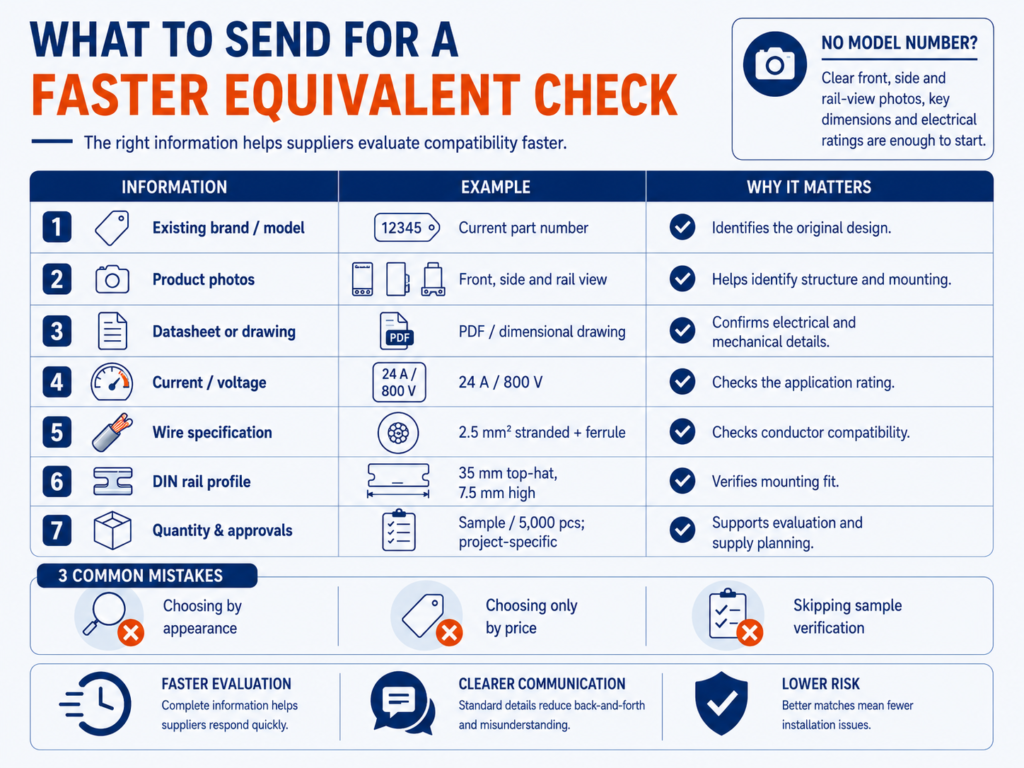
Using these details, SHLING can compare the key electrical and mechanical interfaces and narrow down suitable models for sample evaluation.
A sample can then be checked in the actual assembly before a larger production change.
This process helps OEMs, panel builders, distributors and equipment manufacturers qualify another source while avoiding unnecessary changes to an existing terminal-strip design.
Can I replace a feed-through terminal block with another brand?
Potentially. Compare electrical ratings, conductor compatibility, mounting dimensions, connection method, accessories and required approvals. Similar appearance or model naming is not enough.
Is the same current and voltage rating enough?
No. Terminal width, conductor range, DIN rail fit, wiring method, bridges and accessories can determine whether the replacement works in the existing design.
Frequently Asked Questions
Can I switch from a screw terminal to a push-in terminal?
Possibly, but treat it as a wiring-process change. Confirm conductor preparation, access direction, installation space, tools and maintenance requirements.
What should I send SHLING if I need an equivalent?
Send the original model number or datasheet. If unavailable, provide clear photos, terminal dimensions, current, voltage, wire specification, DIN rail type and quantity.
Should I test samples before changing suppliers?
Yes. For existing production equipment, drawing comparison should be followed by sample verification of mounting, wiring and accessory fit before mass production.
Before You Change Brands, Compare the Interfaces
A feed-through terminal block equivalent should be selected by its interfaces—not by appearance or unit price alone.
Recommended evaluation order
Electrical rating → conductor → DIN rail layout → connection method → accessories → project requirements.
When electrical ratings, conductor compatibility, dimensions, connection technology, accessories and approvals are clear, evaluating a second source becomes faster and safer.
Need Help Checking a Feed-Through Terminal Block Replacement?Send SHLING the current model number, datasheet or clear product photos.We can compare the specifications and recommend suitable SHLING models for sample testing.