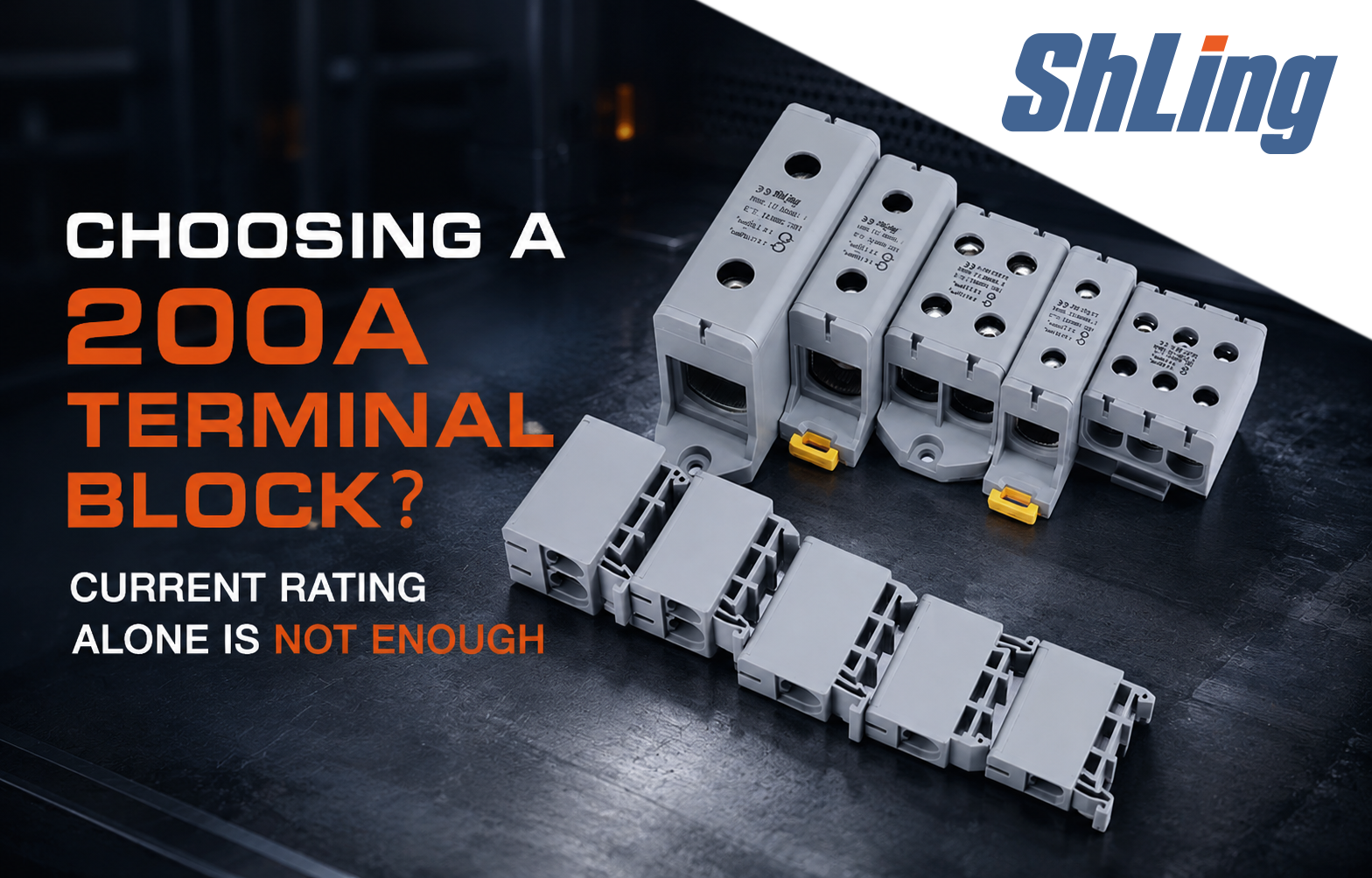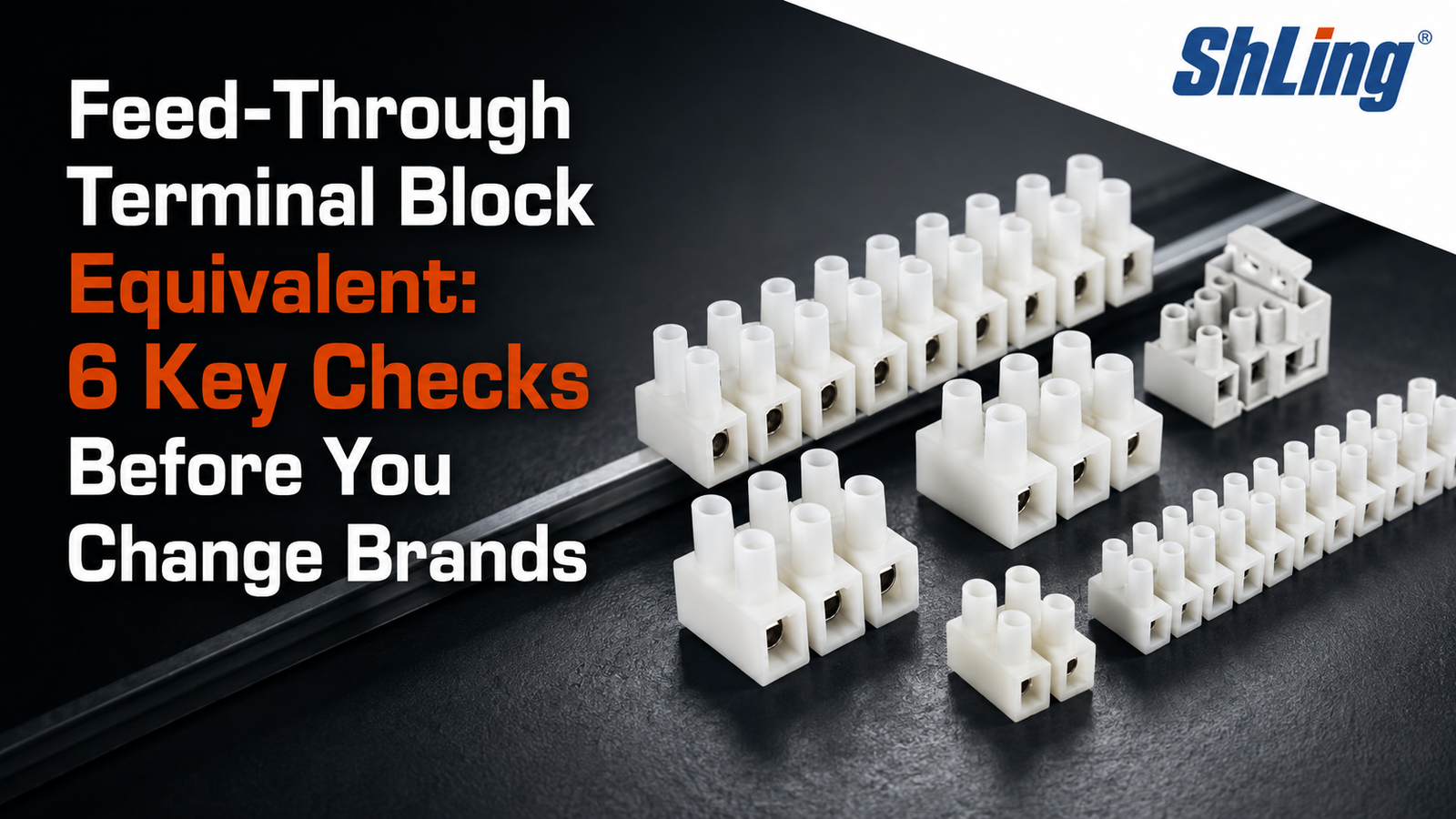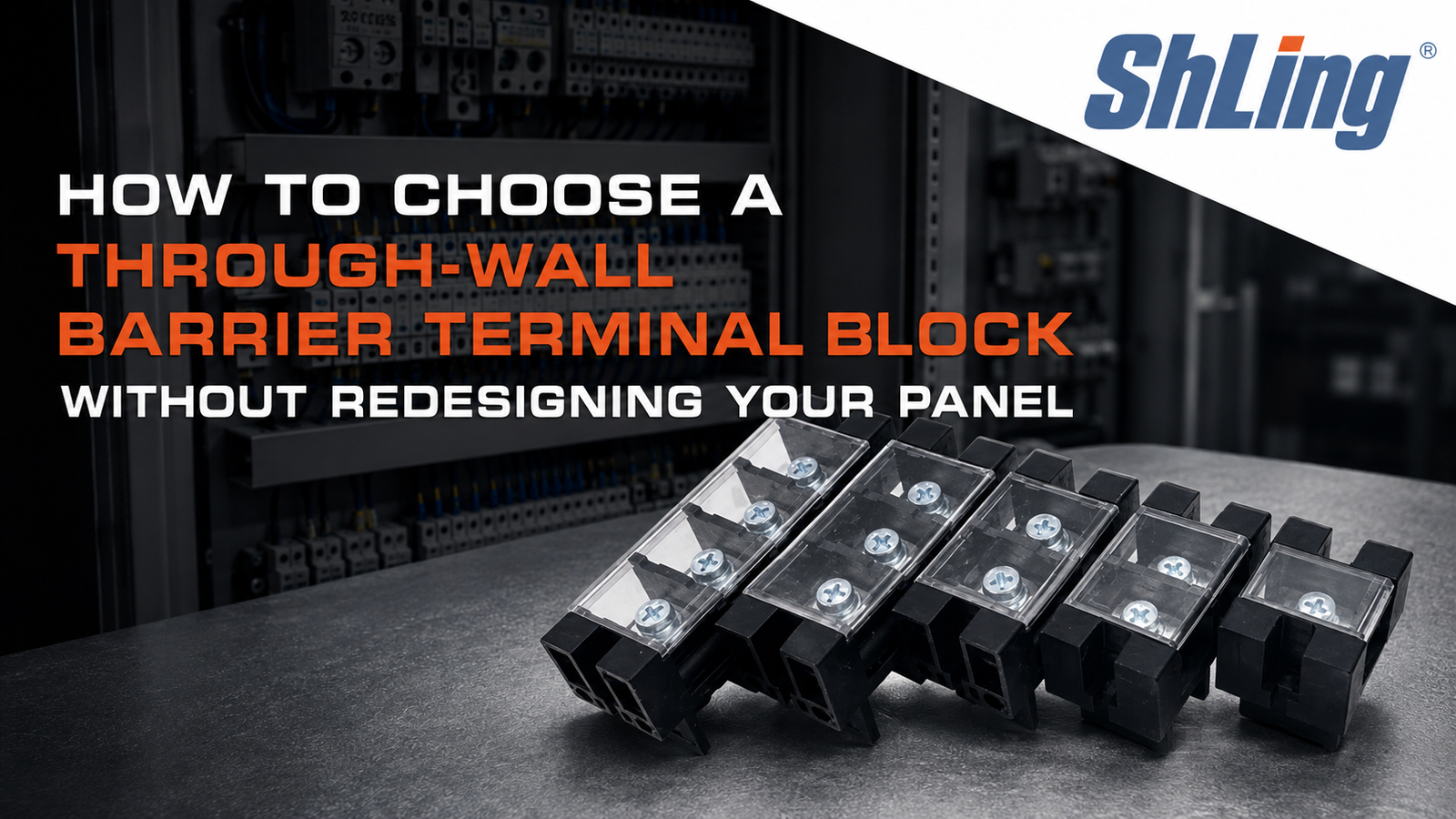
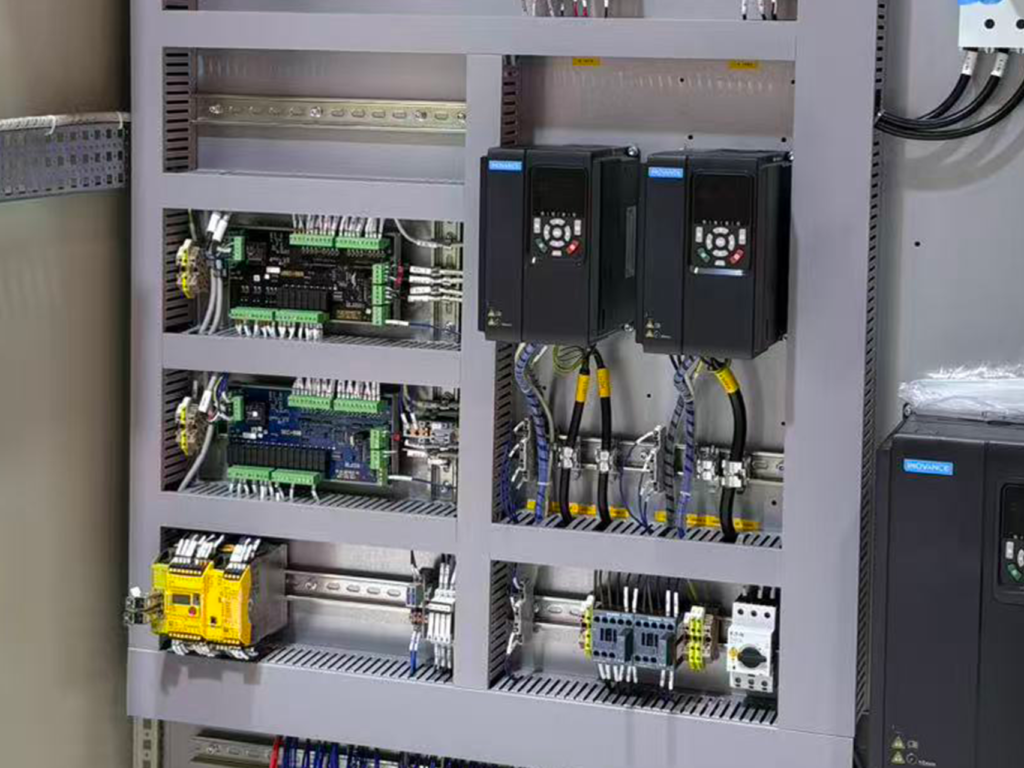
In electrical control cabinets, power distribution systems, automation equipment, and various electronic devices, terminal blocks are very common connection components. Many people may think they are just small wiring accessories at first, but in fact, they play a very important role in the entire electrical system.
Simply put, terminal blocks are not only used for wiring. They also affect how organized the wiring is, how convenient future maintenance will be, how reliable the connection is, and how easy the system is to expand. For those involved in electrical design, equipment manufacturing, control cabinet assembly, and on-site installation, understanding terminal block types and applications is a basic but very important skill.
What Is a Terminal Block?
Definition of a Terminal Block
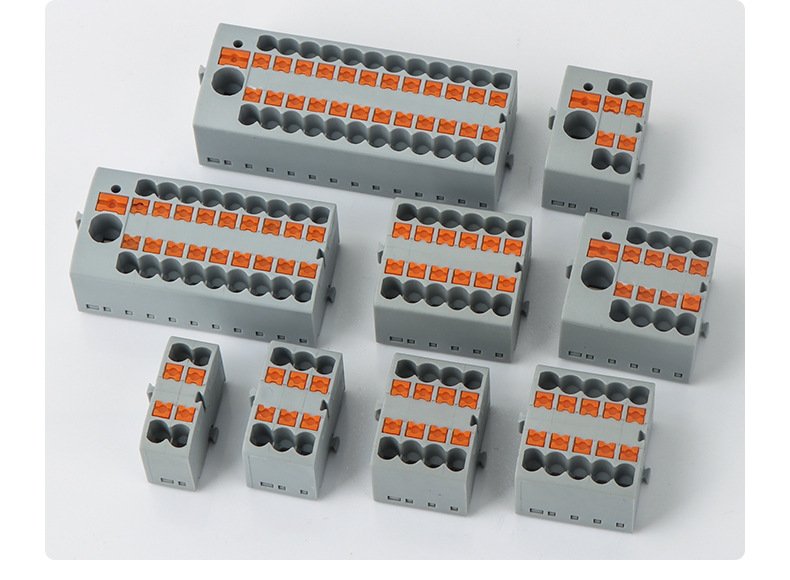
A terminal block is an electrical component that connects multiple wires or circuits. Its main purpose is to make wiring, branching, inspection, and future maintenance easier.
You can simply think of it as a centralized wiring point.
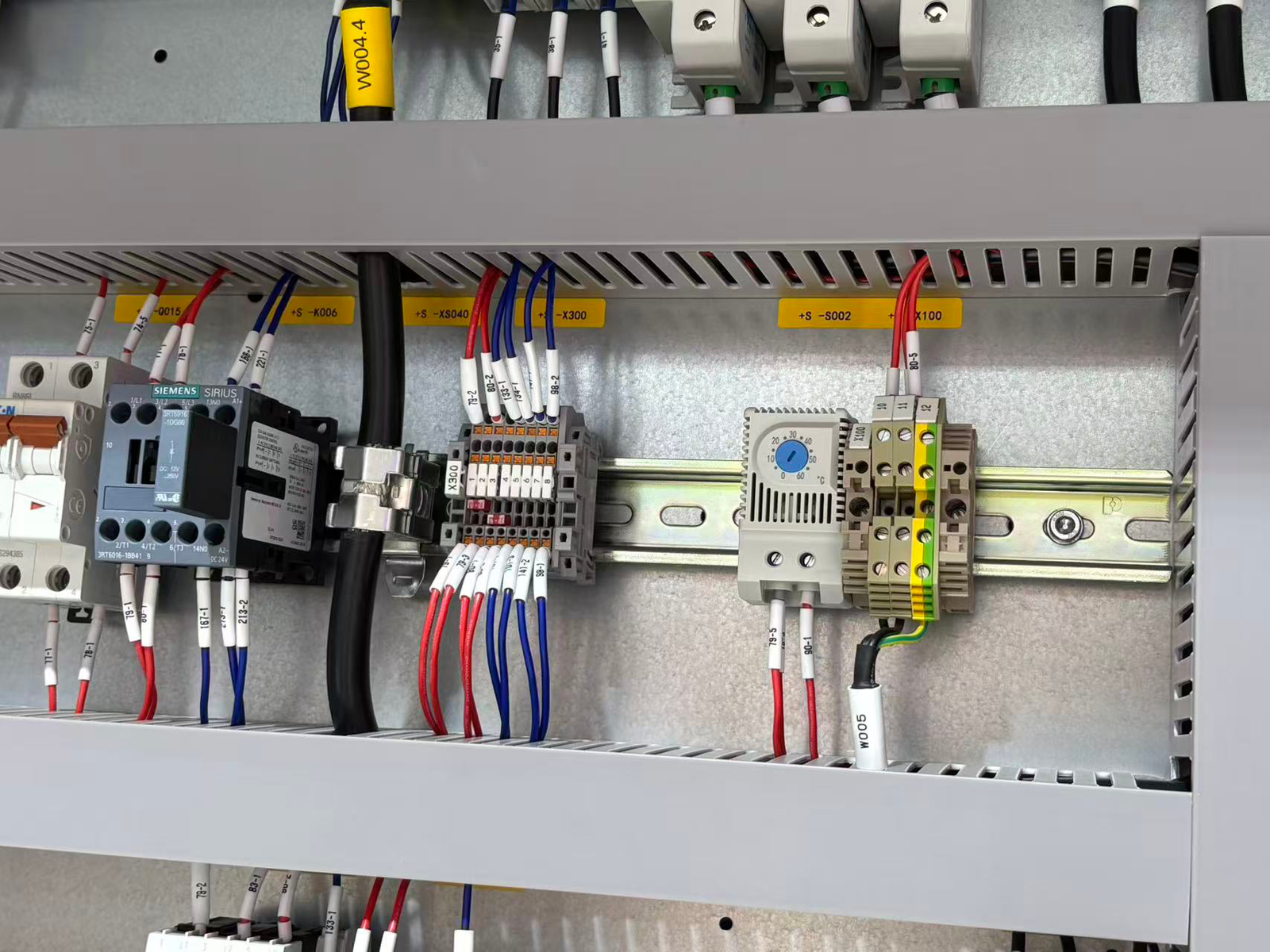
Inside electrical cabinets or equipment, many wires are not connected directly to the device itself. Instead, they are first connected to terminal blocks, and then linked to internal or external equipment through the terminal blocks. This makes the wiring clearer, more standardized, and easier to inspect and maintain later.
In terms of function, terminal blocks mainly serve to connect different wires or circuits, transmit current, voltage, or control signals, centralize wiring management, and make testing, maintenance, and replacement more convenient.
So although a terminal block may look small, it is actually a very basic and critical part of an electrical connection system.
Why Industrial and Equipment Wiring Prefer Terminal Blocks?
In industrial control and equipment wiring, engineers generally prefer using terminal blocks instead of connecting wires directly. The reason is simple: terminal blocks are more standardized, more convenient, and more reliable in actual use.
- Neater wiring: Terminal blocks centralize internal and external wiring connections in one fixed location, making the wiring more organized and reducing cable clutter.
- Higher installation efficiency: With terminal blocks, internal components and external devices can often be wired separately and even in parallel, reducing repeated work and improving overall installation efficiency.
- Easier maintenance: During later debugging, testing, tracing, and troubleshooting, technicians can usually operate directly on the terminal blocks without frequently disassembling the equipment itself.
- More reliable connection: Terminal blocks usually use standardized screw clamping, spring clamping, or other fixing methods to maintain stable contact between the wire and the conductive part.
- Better for system expansion: If additional equipment or circuits are added later, wiring can usually be completed through reserved terminal positions without major changes to the original layout.
- Helps separate power and signal wiring: In industrial control systems, power lines, weak current lines, and signal wires often need to be separated. Terminal blocks help achieve this organized separation.
Overall, terminal blocks are widely used in industrial and equipment wiring because they combine neatness, efficiency, reliability, and ease of maintenance.
Which Industries Use Terminal Blocks?
Terminal blocks are used in a wide range of applications. Basically, any system involving electrical connections may use them.

- Industrial automation: Used to connect sensors, actuators, PLCs, relays, controllers, and other devices. They are one of the most common components in automation control cabinets.
- Power systems and distribution: Commonly used in distribution cabinets, control cabinets, power distribution units, and various electrical equipment.
- Building electrical systems: Frequently used in lighting systems, building control systems, distribution panels, and low-voltage systems.
- Rail transit and transportation: Widely applied in trains, subways, vehicles, and related signal control systems.
- Energy industry: In photovoltaic, wind power, and energy storage systems, terminal blocks are commonly used for power connection, signal transmission, and internal wiring.
- Communication equipment: Also used in switches, routers, base stations, and other communication devices for line connection.
- Home appliances and instruments: Different types of terminal blocks are also used inside products such as washing machines, air conditioners, control instruments, and monitoring devices.
- Medical, military, and aerospace: These industries require higher stability and reliability, so more dependable terminal products are used in critical connection points.
Basic Structure and Working Principle of Terminal Blocks
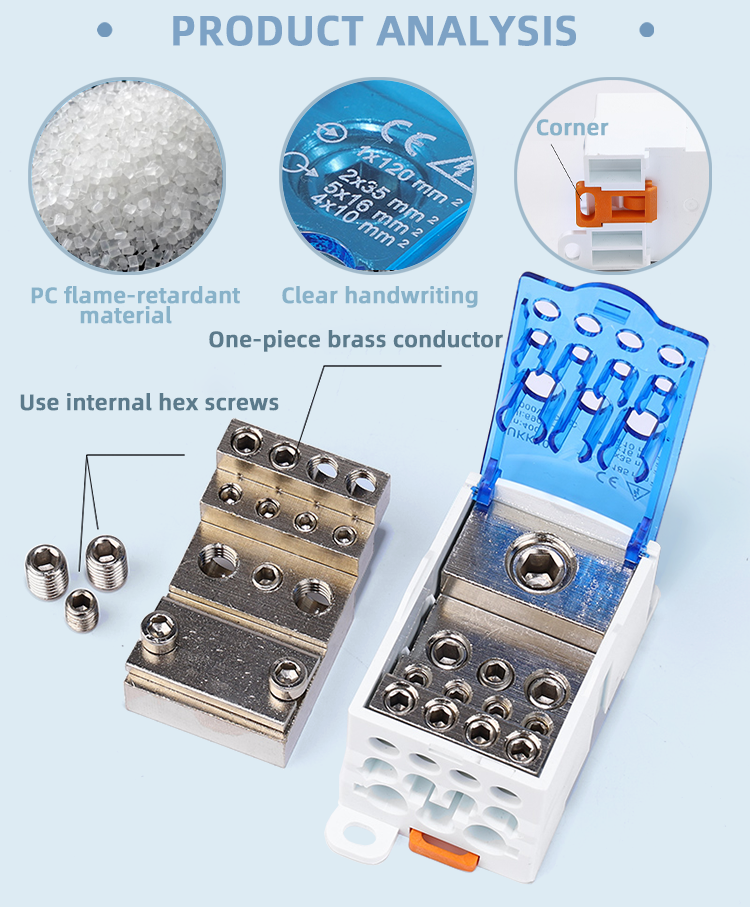
Structurally, a terminal block is not complicated. It generally consists of an insulating housing, a conductive metal part, and a clamping mechanism.
Simply put, its principle is to securely clamp the wire onto the conductive part so that current or signals can pass through with low resistance, while the insulating structure separates adjacent circuits to prevent short circuits or interference.
1.Basic Structure
Insulating base: The insulating base is usually made of plastic, ceramic, or other insulating materials. Its role is to support multiple terminals and electrically isolate them from one another to prevent short circuits between adjacent circuits.
Conductive part: The conductive part is usually made of copper, copper alloy, or aluminum alloy, often with tin plating to improve conductivity and corrosion resistance.
Clamping component: This is the key structure used to secure the wire. Common forms include screws, spring clamps, and insulation displacement connection structures.
2.Working Principle
The working principle of a terminal block is easy to understand: when a wire is inserted into the terminal, the clamping mechanism firmly secures it to the conductive part. Current then enters through one wire, passes through the conductive path, and flows to the other wire or connected equipment, forming a stable electrical connection path.
In this process, the conductive part carries current or signals, the clamping mechanism ensures tight contact, and the insulating base isolates adjacent terminals.
In addition, many terminal blocks support modular expansion. For example, double-level and triple-level terminals can provide more circuits in limited space, and some terminals can also achieve parallel connections through jumper bars.
Main Classification Methods of Terminal Blocks
In practical applications, there are many types of terminal blocks. To make selection and use easier, they are usually classified from different perspectives. Common classification methods include connection type, mounting method, functional application, and number of levels and poles.
Classified by Connection Method
Screw-type terminal blocks: The wire is tightened by a screw. This is a mature and reliable connection method that also allows repeated disassembly and reassembly.
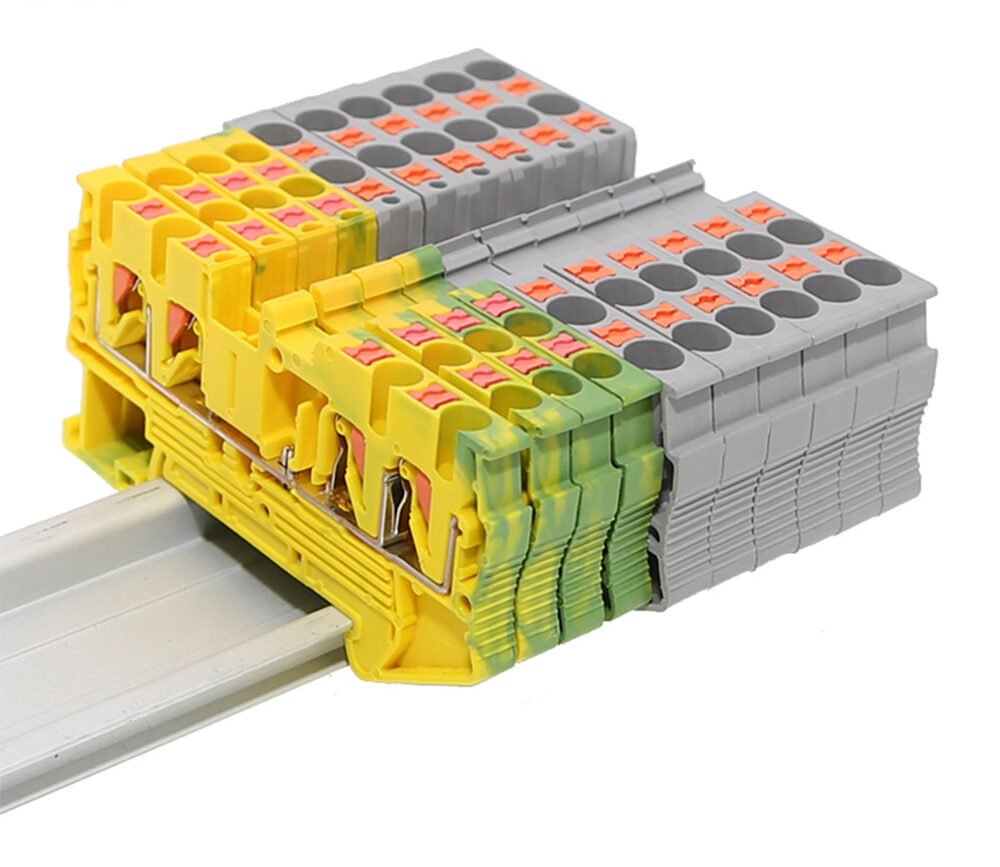
Spring-type terminal blocks: These use spring force to automatically clamp the wire, offering faster wiring and better vibration resistance.
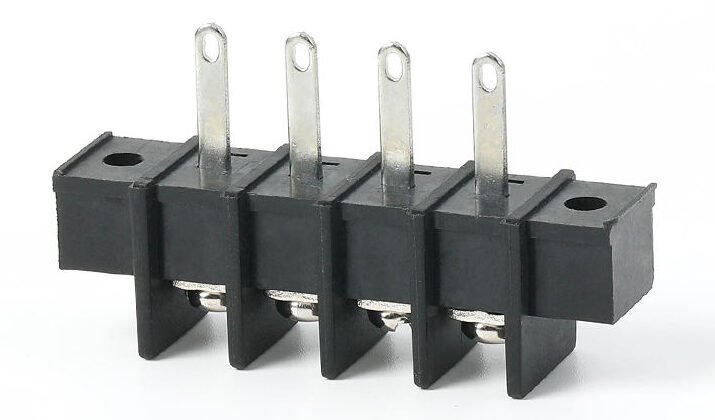
Barrier terminal blocks: These have obvious separation and protection structures, making them suitable for high-current and high-voltage environments.
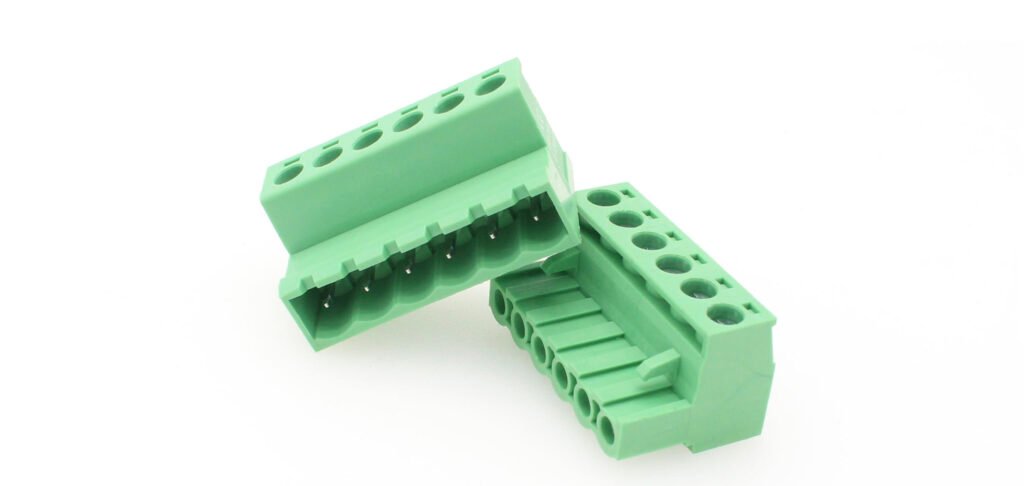
Pluggable terminal blocks: Usually made of two parts, one fixed and one pluggable, which makes maintenance more efficient.
Classified by Mounting Method
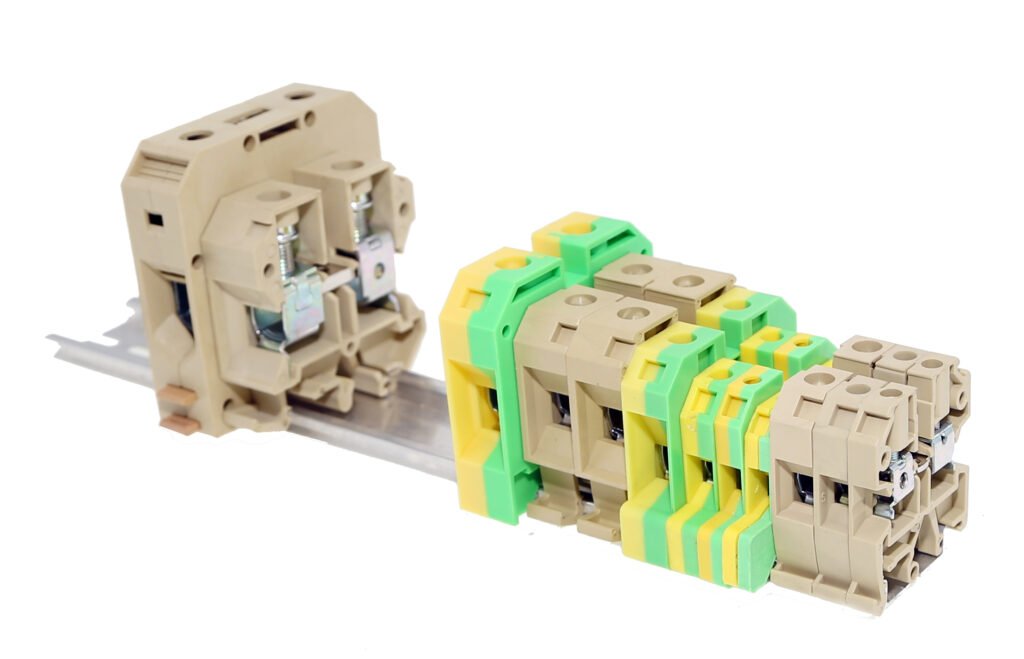
DIN rail terminal blocks: Usually mounted on standard DIN rails, they are easy to install and remove, making them suitable for control cabinets and distribution panels.
Panel-mount terminal blocks: Usually fixed to equipment panels, enclosures, or cabinet surfaces with screws or clips.
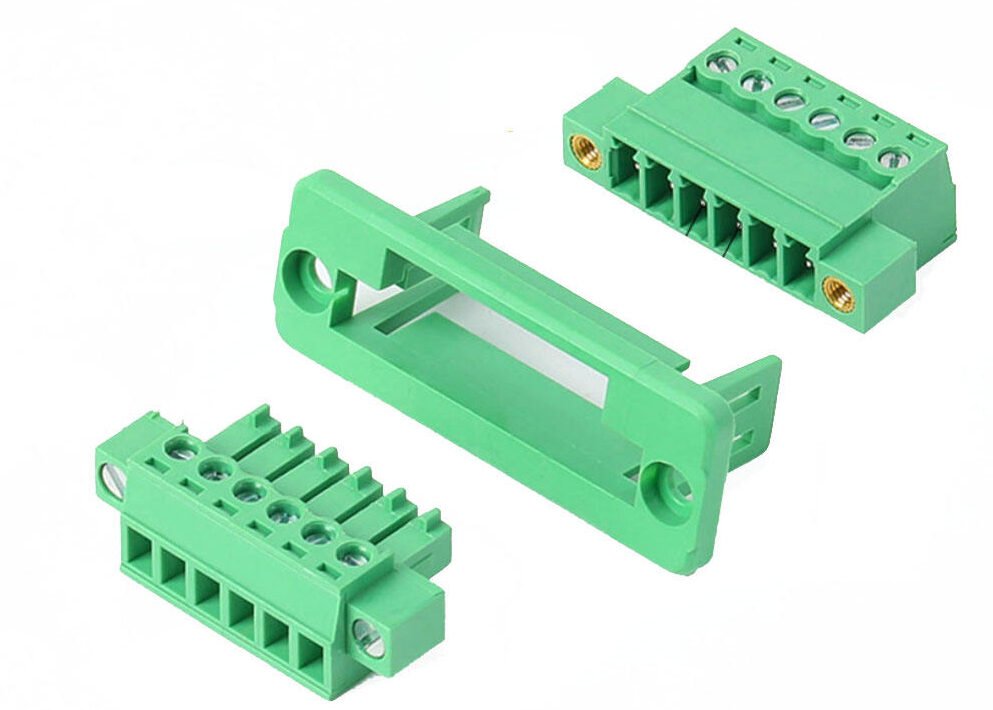
PCB terminal blocks: Installed directly on printed circuit boards and suitable for compact internal wiring in electronic devices.
Classified by Function and Application
Standard terminal blocks: Used for general power, control, or signal transmission.
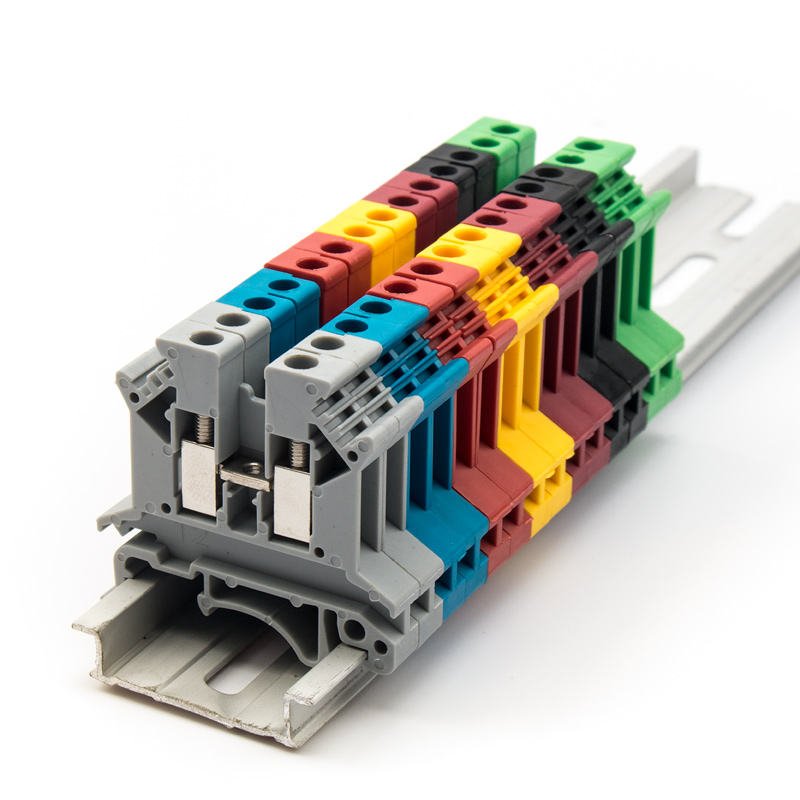
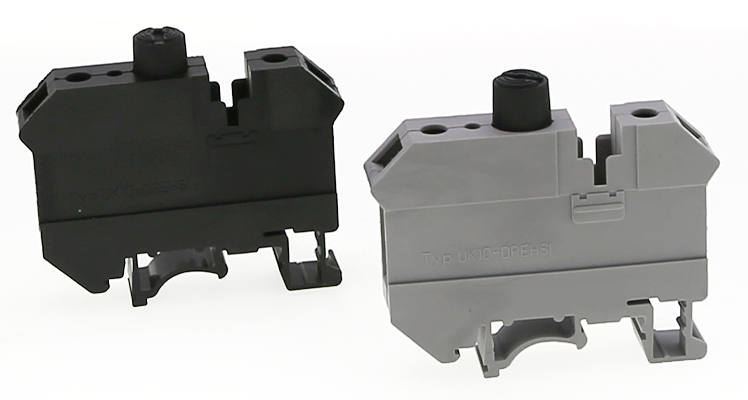
Fuse terminal blocks: Designed to hold a fuse and provide overcurrent protection.
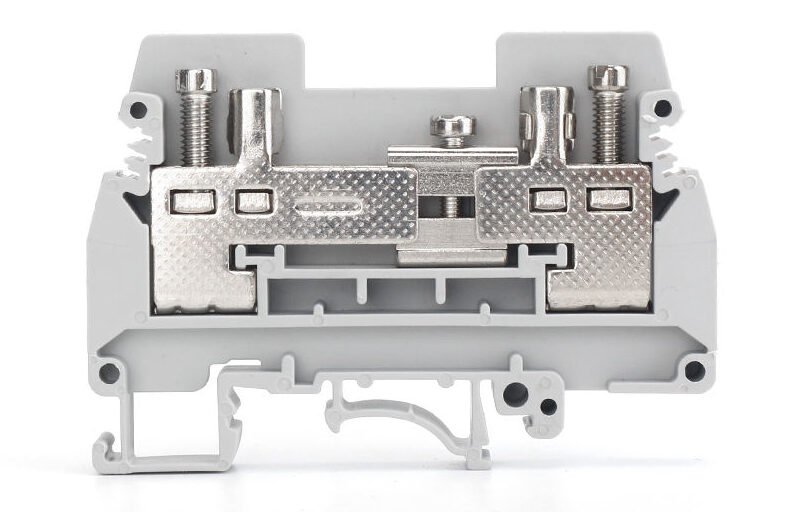
Test terminal blocks: Designed with test points for easier measurement by technicians.
Ground terminal blocks: Specifically used for PE grounding wires to ensure reliable grounding of equipment.
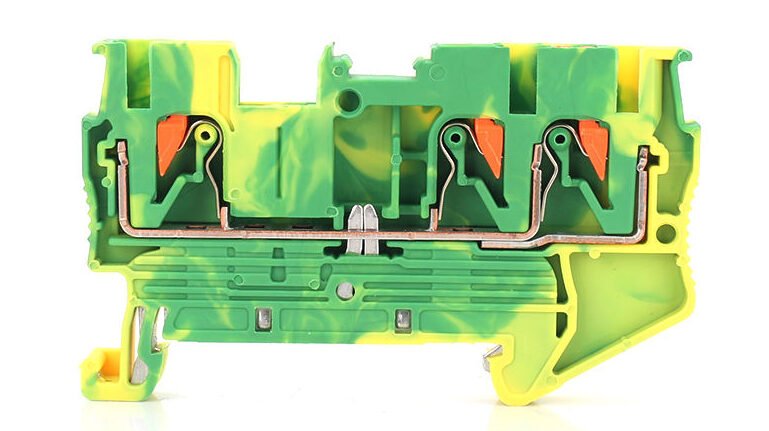
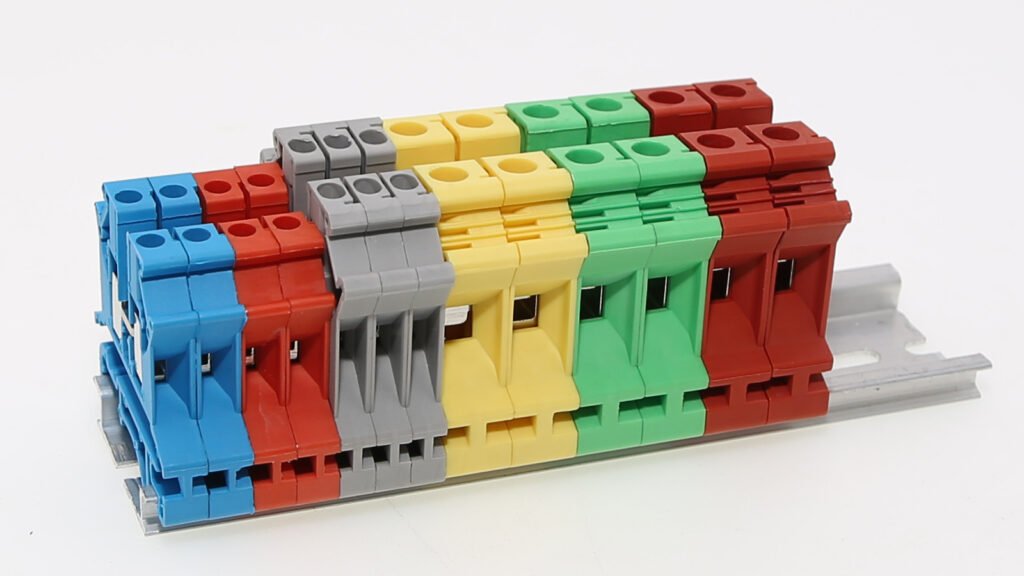
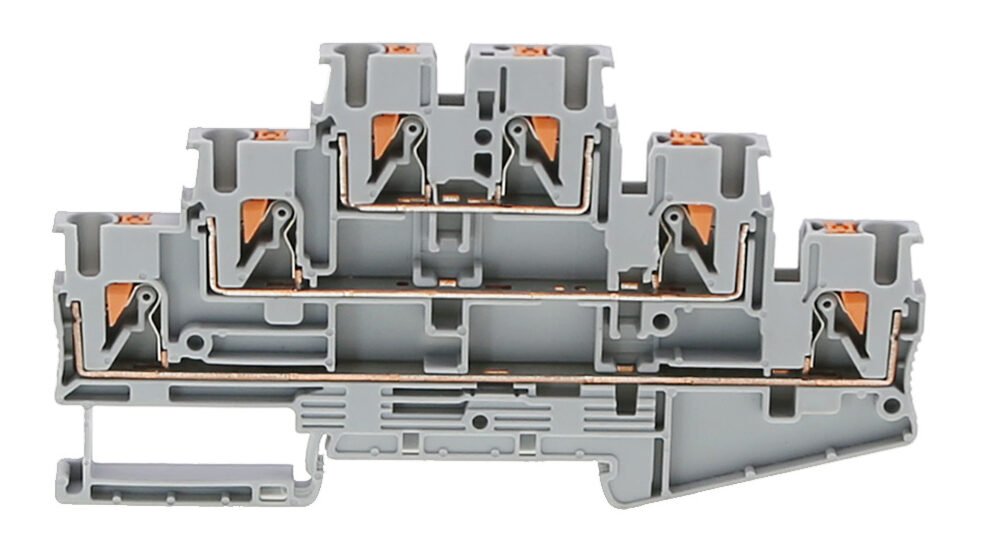
Double-level / triple-level terminal blocks: Increase wiring density through a multi-level structure, and are suitable for space-limited applications.
Feed-through terminal blocks: Internally connected and suitable for parallel circuit connections.
One-in two-out terminal blocks: Allow one input and two outputs, suitable for simple signal or power distribution.
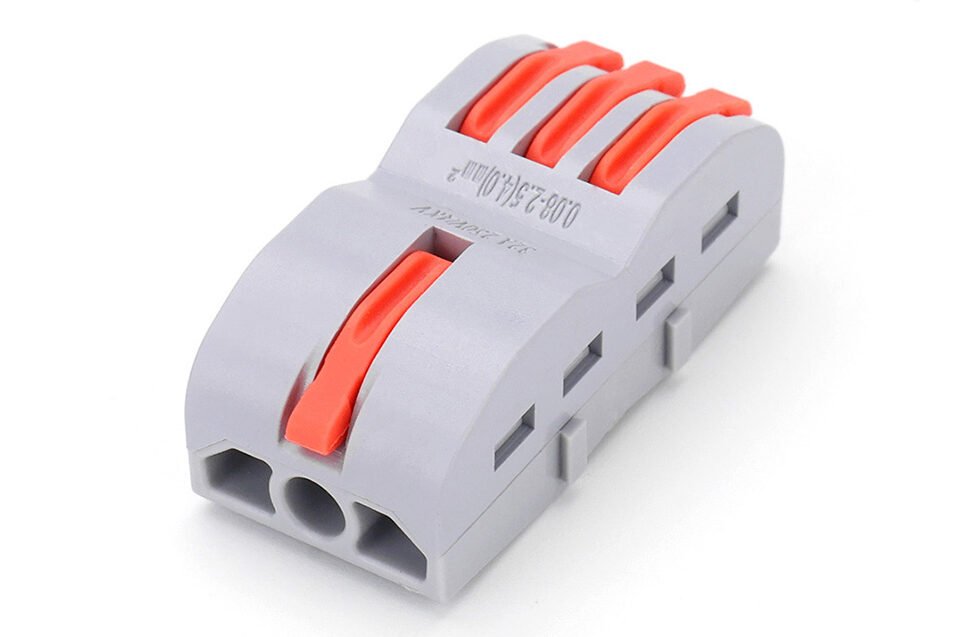
Classified by Number of Levels and Poles
In terminal block selection, the number of levels and poles are also very important parameters. They directly affect wiring density, required space, and the number of connectable circuits.
Single-level terminal blocks: Have only one level of wiring structure and are suitable for applications with fewer circuits or sufficient installation space.
Double-level terminal blocks: Have two independent wiring levels, making them suitable for control cabinets where space utilization matters.
Triple-level terminal blocks: Further improve wiring density and are suitable for high-density wiring and complex control systems.
Number of poles (P) refers to how many independent wiring positions are contained in one terminal module. Common specifications include 2P, 3P, 4P, 6P, 12P, 24P, 36P, and above.
Simply put, the number of levels determines how many vertical layers there are, while the number of poles determines how many wiring positions each level has.
Conclusion
Although terminal blocks are basic components in electrical systems, their role goes far beyond simply “connecting wires.” They affect wiring quality, wiring efficiency, equipment maintenance, system expansion, and operating reliability.
Fortunately, Shengling is a manufacturer specializing in terminal blocks. The quality of our terminals is comparable to brand-name products, but at a more favorable price. Here is a link to our Products – list; feel free to browse.