Damaged wire insulation, aging cable jackets, and loose wire connections are actually common problems in everyday household use. For many people, the first instinct is simple: grab some electrical tape, wrap it up, and hope it keeps working.
But the real question is not whether the wire still works for now. What matters is whether this quick fix creates a bigger safety risk later—such as electric leakage, heat buildup, short circuits, or even a more serious failure over time.
That is why electrical tape and terminal blocks are not interchangeable solutions. They serve different purposes. The right choice depends on where the wire is damaged, how severe the damage is, and whether the conductor inside has also been affected.
First Identify the Real Problem: Is the Insulation Damaged, or Is the Conductor Broken / Connection Loose?
Before deciding whether to wrap the wire with tape or use a terminal block, the first step is not repair—it is diagnosis. Many wire problems look similar from the outside, but the correct solution depends entirely on the actual type of damage.
Case 1: Only the Insulation Is Slightly Damaged
In this situation, the outer plastic insulation is scratched, worn, or slightly cracked, but the copper conductor inside is still intact. You may be able to see the copper or shielding layer, but the cable itself is not thinner, swollen, or burnt.
At first glance, this type of wire may still seem usable, and the appliance may continue to work normally. That is why many people think wrapping it with tape is enough. However, once the insulation is damaged, the wire already carries a risk of electric leakage or short circuit—especially in humid conditions, near metal surfaces, or when two damaged wires are close together.
Case 2: The Conductor Is Broken, Detached, or Needs Reconnection
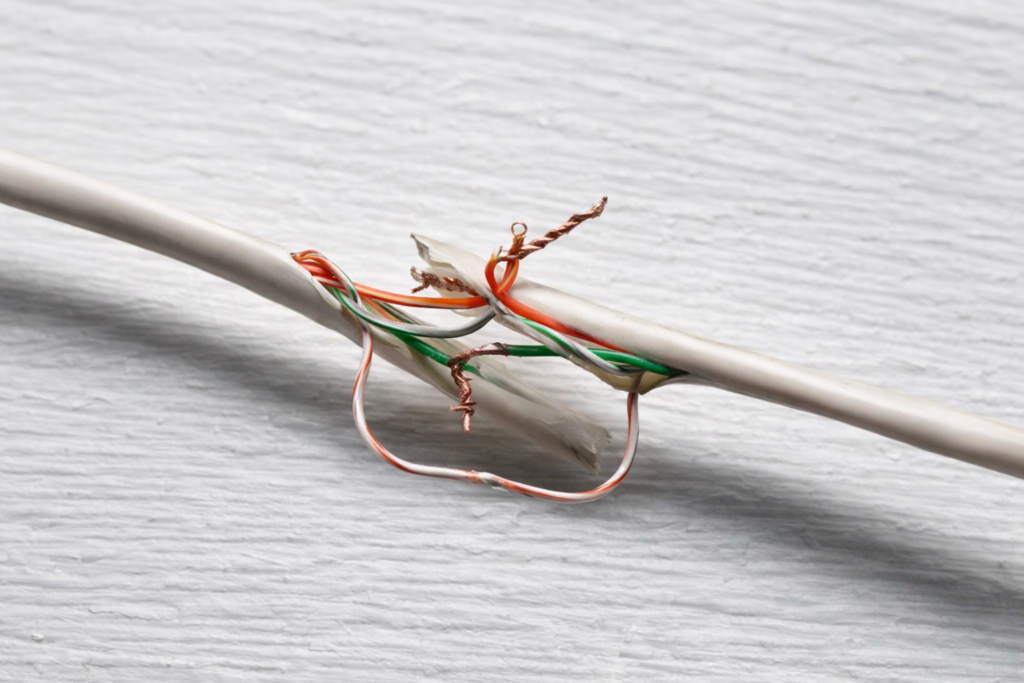
A more serious problem occurs when the outer jacket appears intact, but the conductor inside is already broken, partially fractured, or connected by onlya few remaining strands. This often happens near plug exits, equipment entry points, or areas exposed to repeated bending.
Typical symptoms include a complete loss of power, or the classic “it only works when bent a certain way.” You move the wire slightly, and it works again; let go, and it fails. This is no longer just an insulation issue. It is a conductor connection problem.
In this case, electrical tape cannot solve the real problem. The wire usually needs to be reconnected properly with a terminal block or connector, and in severe cases, the cable should be replaced entirely.
Case 3: Loose Connection or Poor Termination
Another dangerous but often overlooked issue is a loose connection or poorly terminated joint. This does not always happen in the middle of the wire. It is more common inside plugs, socket terminals, junction boxes, terminal blocks, or connector contact points.
The symptoms are usually intermittent. For example, the device works again when you slightly move the plug or press the socket faceplate. But this “sometimes works” condition is actually one of the most dangerous, because it usually means poor contact, higher resistance, and ongoing heat generation.
If ignored, it may first cause discoloration and overheating, then lead to burning, melting, and eventually complete conductor failure.
Case 4: Insulation Failure Causing Short Circuit or Leakage
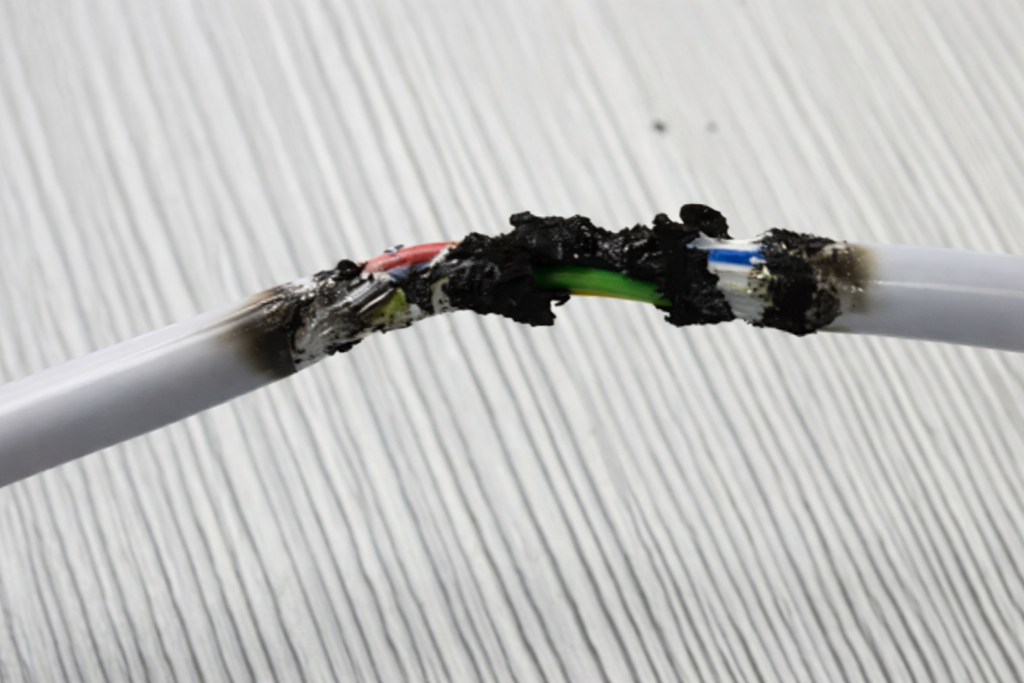
When the insulation damage becomes more serious, it may result in a short circuit or electrical leakage. A short circuit usually happens when two live conductors touch each other because of worn insulation, crushing, or abrasion. The current bypasses the intended load, causing a sudden surge that may spark, trip, or burn wiring.
Leakage, on the other hand, happens when current escapes through the damaged area to ground, a metal enclosure, or a damp surface. In some cases, the appliance may still operate, but a voltage tester may light up, or a person may feel a slight shock when touching the housing. This is also not a condition that should be tolerated.
Is Wrapping a Wire with Electrical Tape Actually Acceptable?
When Can Electrical Tape Be Used?
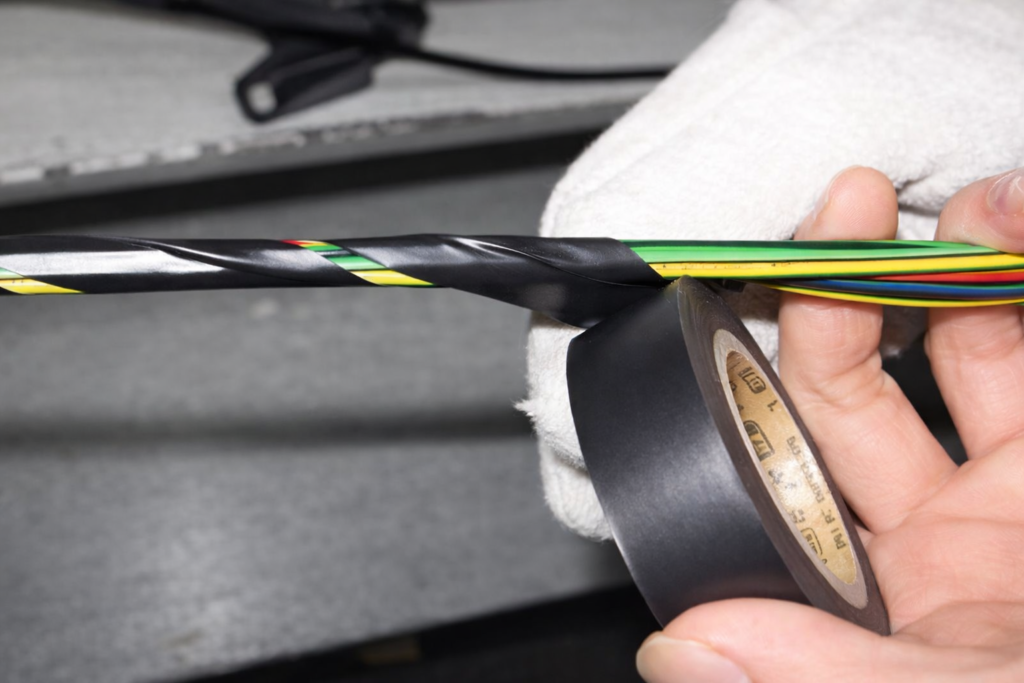
If the damage is limited to light surface insulation wear, and the conductor inside is confirmed to be intact, stable, and free from burn marks or overheating, electrical tape can be used as a temporary insulation fix. It is more suitable for low-risk, non-critical areas and can also serve as supplementary insulation.
But there is an important condition here: electrical tape is meant for insulation, not for replacing a proper electrical connection. In simple terms, it can cover the wire, but it cannot restore a failed connection.
So in most cases, using tape should be seen as a temporary measure rather than a permanent or proper repair. In many situations, the more appropriate solution is to replace the damaged wire or rebuild the connection correctly.
In What Situations Is Tape Not Enough—No Matter How Much You Use?
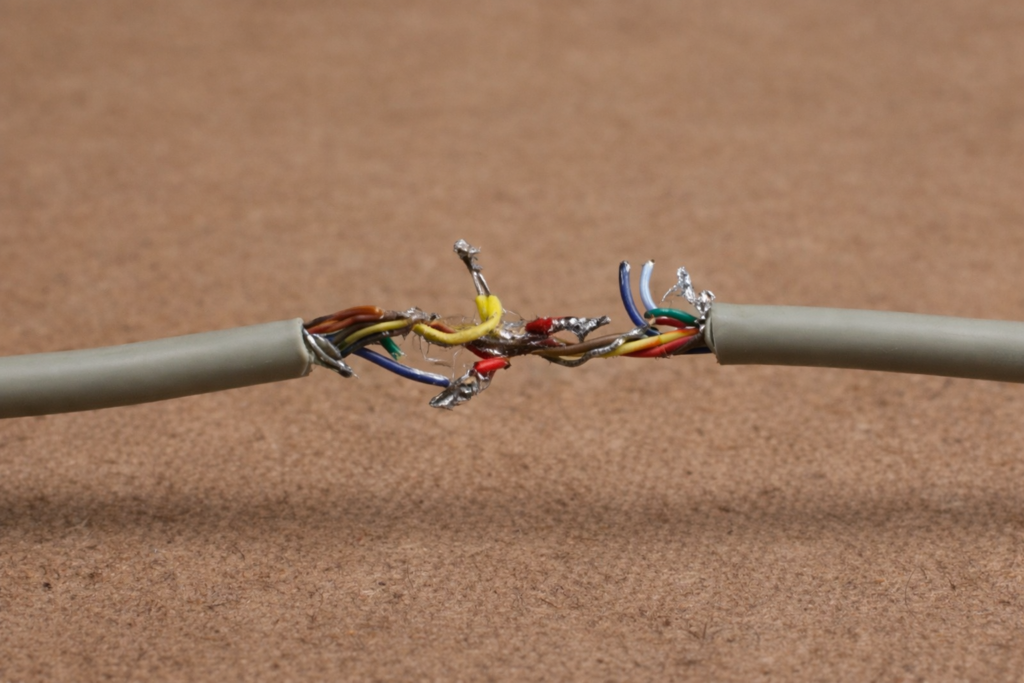
Many people assume that if they wrap the wire thickly enough and tightly enough, the problem is solved. But electrical tape only provides insulation. It does not create a stable mechanical joint or improve the quality of the electrical contact inside.
If the conductor inside is already broken, or the joint itself is loose and unstable, wrapping more tape around the outside does not solve anything. Over time, the tape may age, peel, loosen, or lift at the edges. Its reliability drops even further in hot, humid, or dusty environments.
Common Misunderstandings in Home Wire Repair.
There are three very common misunderstandings in household wire repair. First, many people think that if the copper is no longer visible, it must be safe. Second, they believe that thicker tape means better protection. Third, they assume that if electricity still flows, the repair must be acceptable.
In reality, the real danger is not whether the outside is covered. It is whether the conductor inside is damaged, whether the contact is reliable, and whether the joint will continue to heat up over time.
Conclusion: Electrical tape is suitable as insulation support, but not as a long-term solution for damaged wire connections.
If the Wire Is Already Broken, Tape Is No Longer the Right Main Solution.
The Real Risk Is Inside the Connection, Not on the Outside.
When a wire is already broken, or only a few strands are still making contact, the focus is no longer on whether the outside is covered. The real question is whether the inside is actually connected in a secure and stable way. Covering the outside does not guarantee a reliable electrical joint.
Once the internal contact becomes poor, local resistance increases. As current flows through that high-resistance point, heat builds up more easily. That heat accelerates insulation aging, worsens the contact quality, and creates a dangerous cycle.
Terminal blocks are better suited for solving problems that tape cannot handle.
The main advantage of a terminal block is that it does not simply press two conductors together. Instead, it uses a defined clamping, tightening, or locking structure to hold the conductors in a stable and controlled connection point.
This makes the wire less likely to loosen, improves contact stability, and makes later inspection and maintenance easier. When the issue involves broken wires, branching, or reconnection, a terminal block is usually more reasonable than tape alone and much closer to a proper wiring practice.
For higher-standard wiring, branching, and equipment connection applications, a proper terminal block / wire connector is often far more reliable than simply wrapping the wire with tape.
So How Should You Choose a Terminal Block?
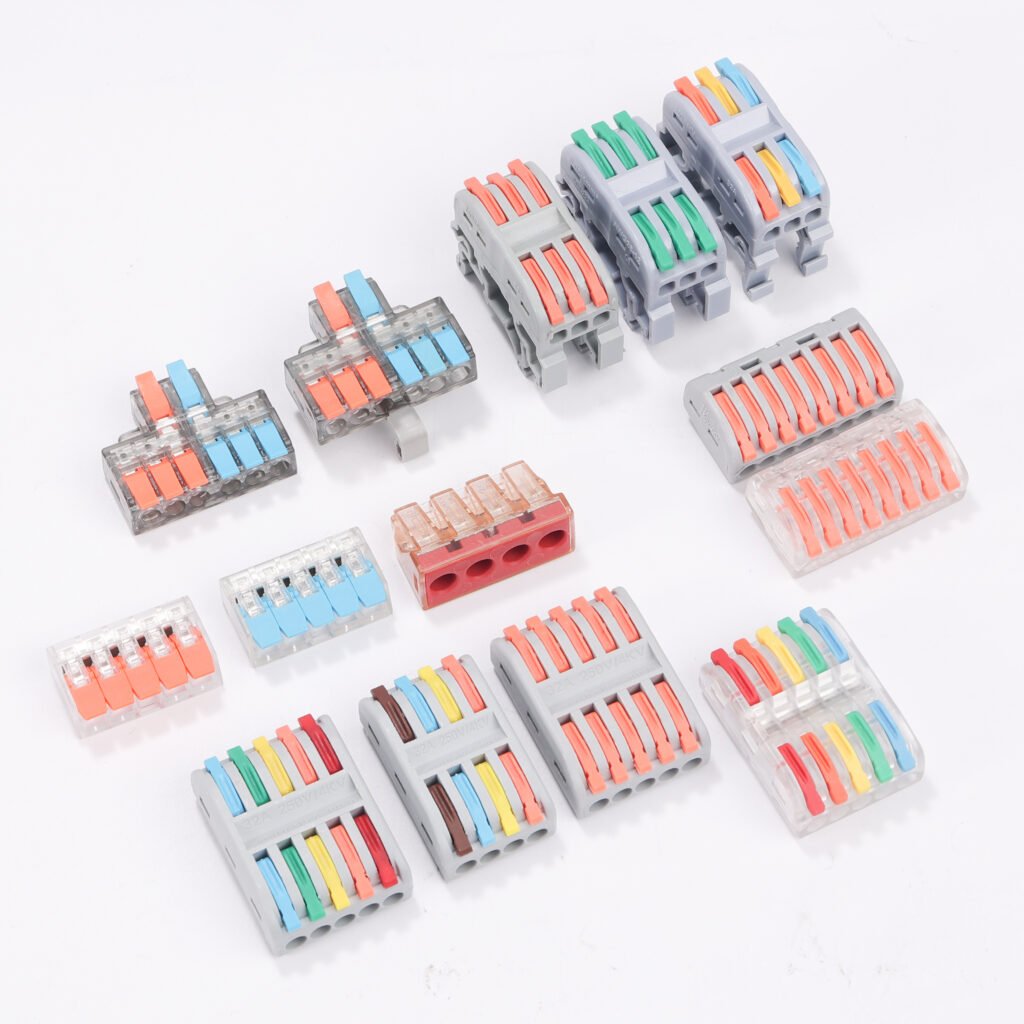
Check three things first: current, wire size, and wire type.
Before choosing a terminal, you should first confirm these three parameters:
What circuit will it be used in:
Lighting circuits and small socket branch circuits (generally within 10A).
High-power circuits such as kitchens, air conditioners, water heaters, and similar loads (typically 16A–32A or even higher).
Wire cross-sectional area (excluding insulation):
Common sizes: 1.5 mm² for lighting, 2.5 mm² for general sockets, and 4–6 mm² for air conditioners, kitchens, or main incoming household wiring.
Wire type:
Solid wire (BV), stranded building wire (BVR), and flexible wire (RV, such as plug-connected flexible cords). Different terminal types have different compatibility ranges.
Terminal specifications usually state something like “suitable for 0.5–2.5 mm²” and “rated current 24A.” Your wire size and current should fall within the stated range.
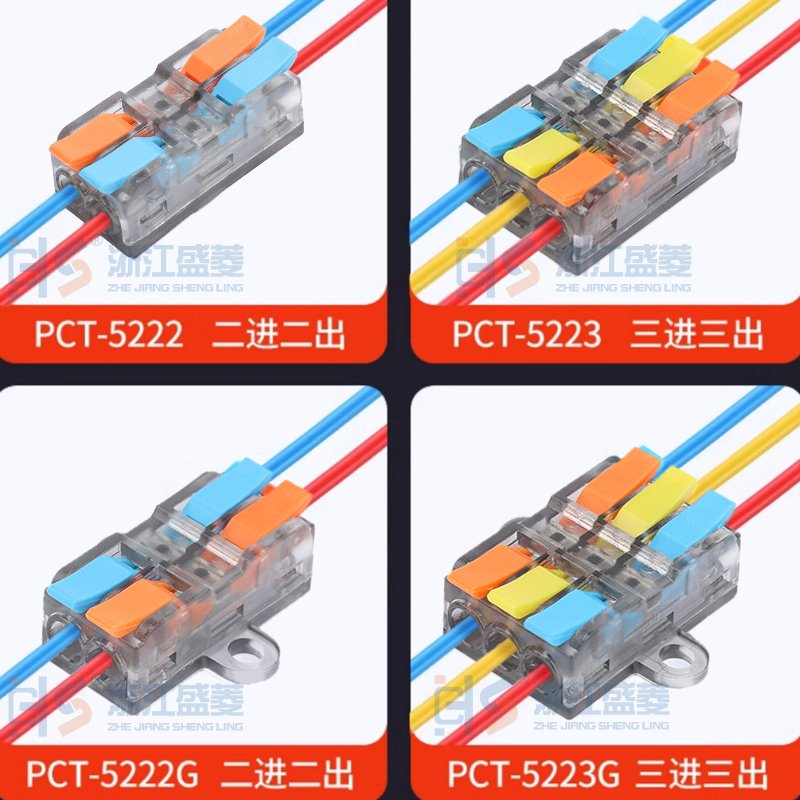
If you are looking for a safer and more standardized solution for household wiring, SL Terminal offers a relatively complete range of household terminal blocks for different wire sizes, connection methods, and home wiring applications. Compared with simply wrapping wires with electrical tape, a proper terminal block can provide more reliable connections and make future inspection and maintenance easier.
Welcome to our website to find the terminal blocks that are compatible with your needs.